TOEFL #
Notes for TOEFL prep. I enrolled in a New Oriental online course, but I still need to prepare properly myself—offline classes are too expensive, and I do not want the commute. That is roughly the situation.
Practice makes perfect!!!
TOEFL is hard. Study as hard as I can.
OK—passed it outright. Not a spectacular score, but enough for my needs.
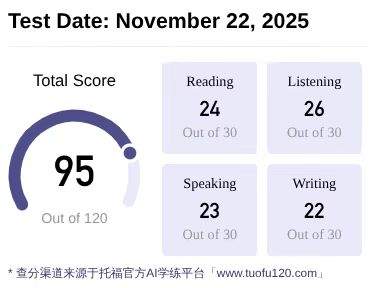
Overview #
Tried the past 30 questions once: hard and fast—only 14 correct, but still about 20 points.
Tried 20 questions again; timing felt a bit more comfortable.
First listen can hit 20+; the harder bits are often English-culture related. Listening questions do not chase extreme detail—that helps.
First speaking attempt felt awful, but the score was 20? Maybe the accent is okay. I do not think it is that hard to train—speak more, think more.
Watched a few prep videos: everyone’s situation differs; solid preparation can get you there.
For vocabulary: XDF TOEFL Pro and MoMo. MoMo expands vocabulary; XDF TOEFL Pro collects unfamiliar words from reading and listening.
Daily practice:
Vocab + listening or reading (word bank) + speaking or writing (material bank) + class
Prep is basically that. The only hard part is actually doing it.
Speaking #
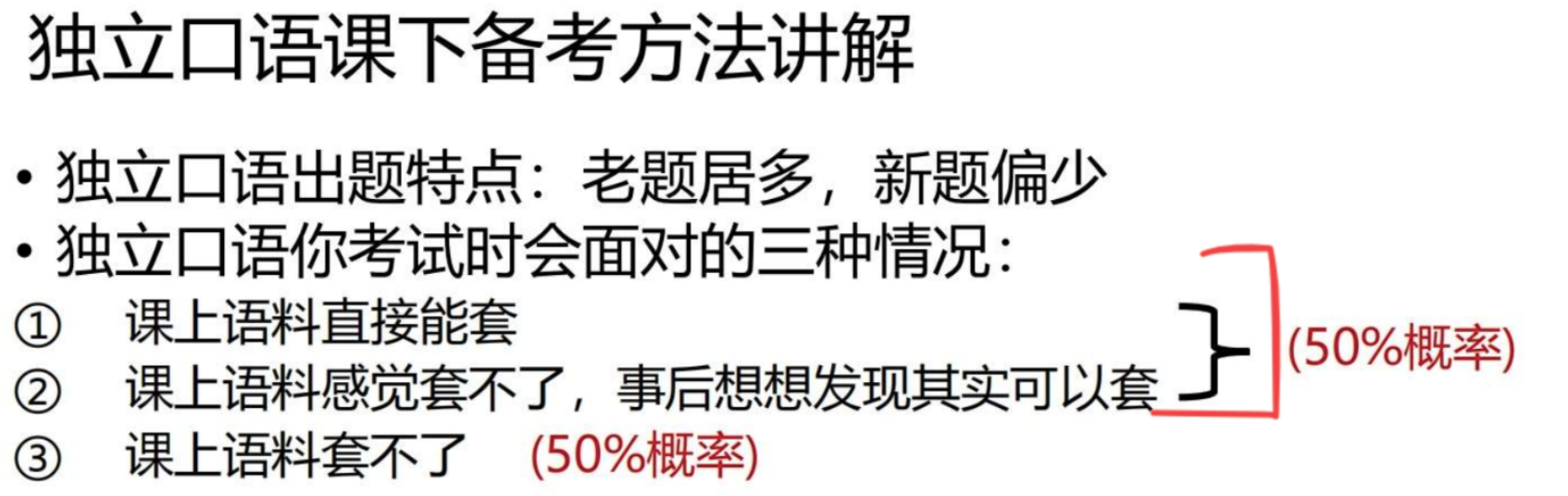
Personally I find TOEFL speaking easier than IELTS. The last three tasks lean on listening; Task 1 needs heavy accumulation and practice. First: dare to speak. Second: fill the time. Third: speak well.
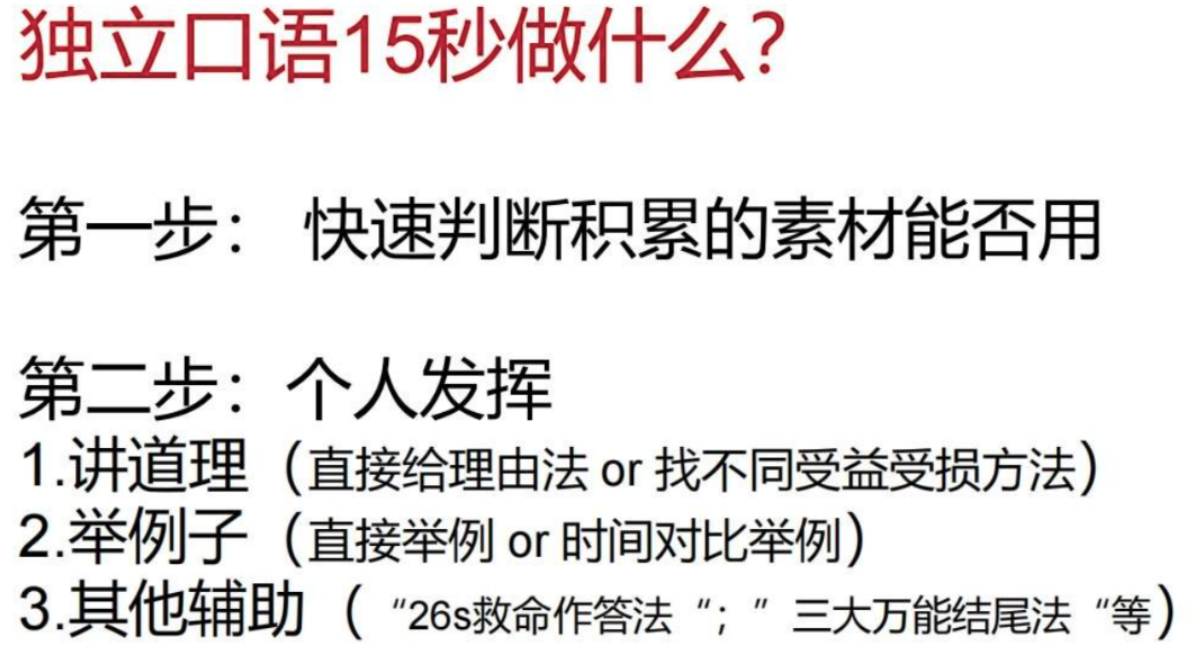
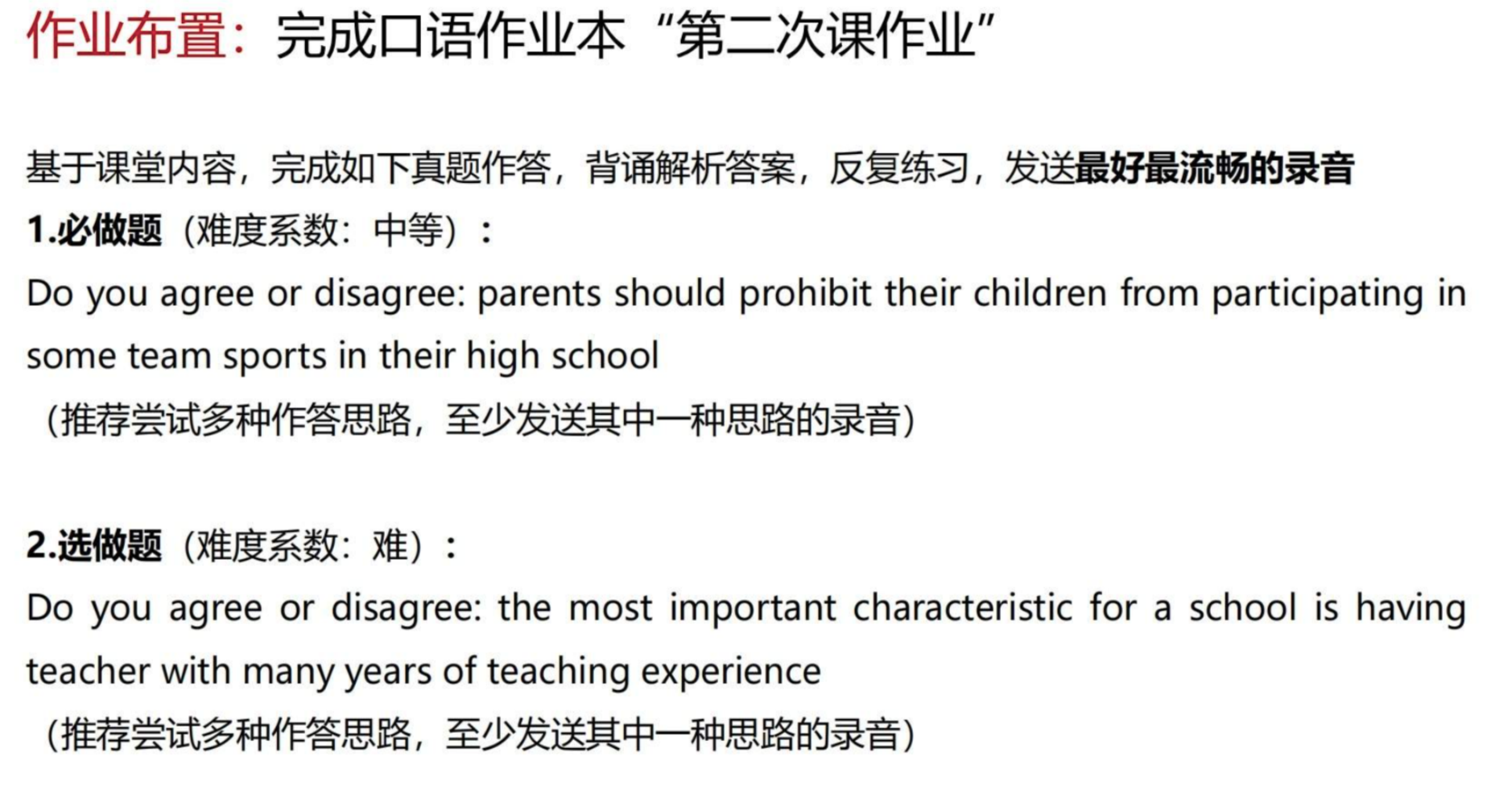
Task1 Independent Speaking #
Finishing is less important than speaking clearly.
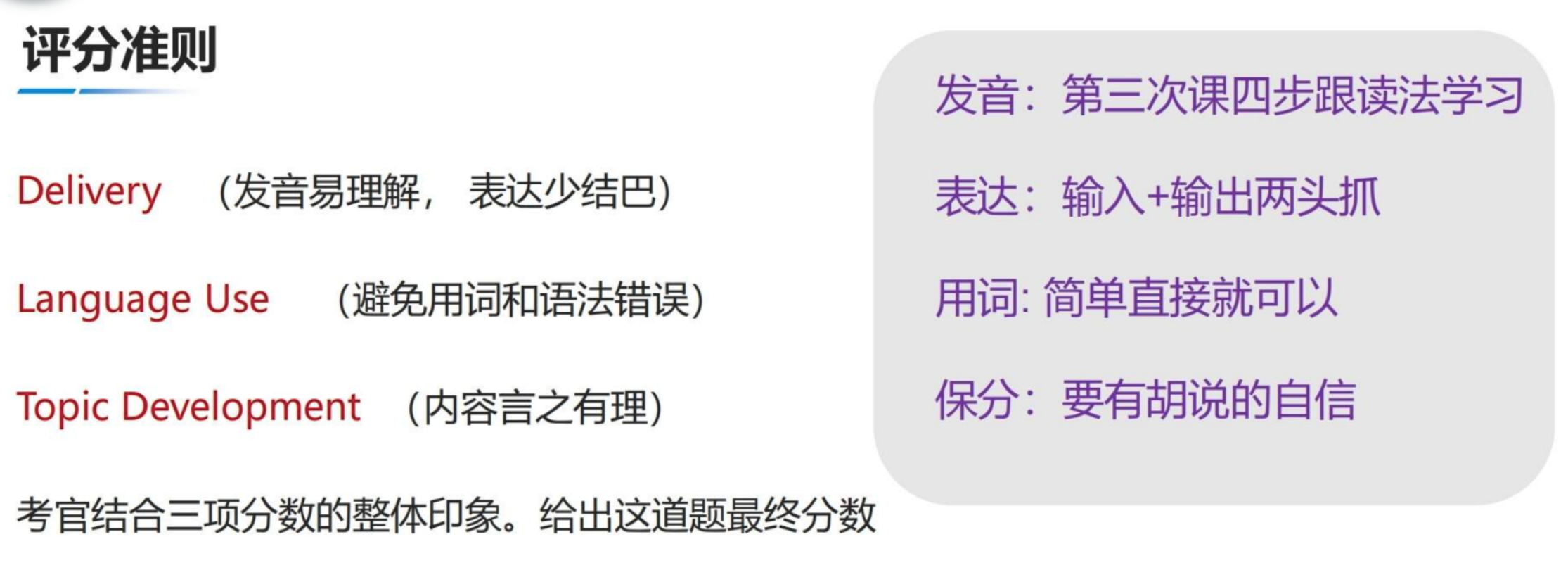
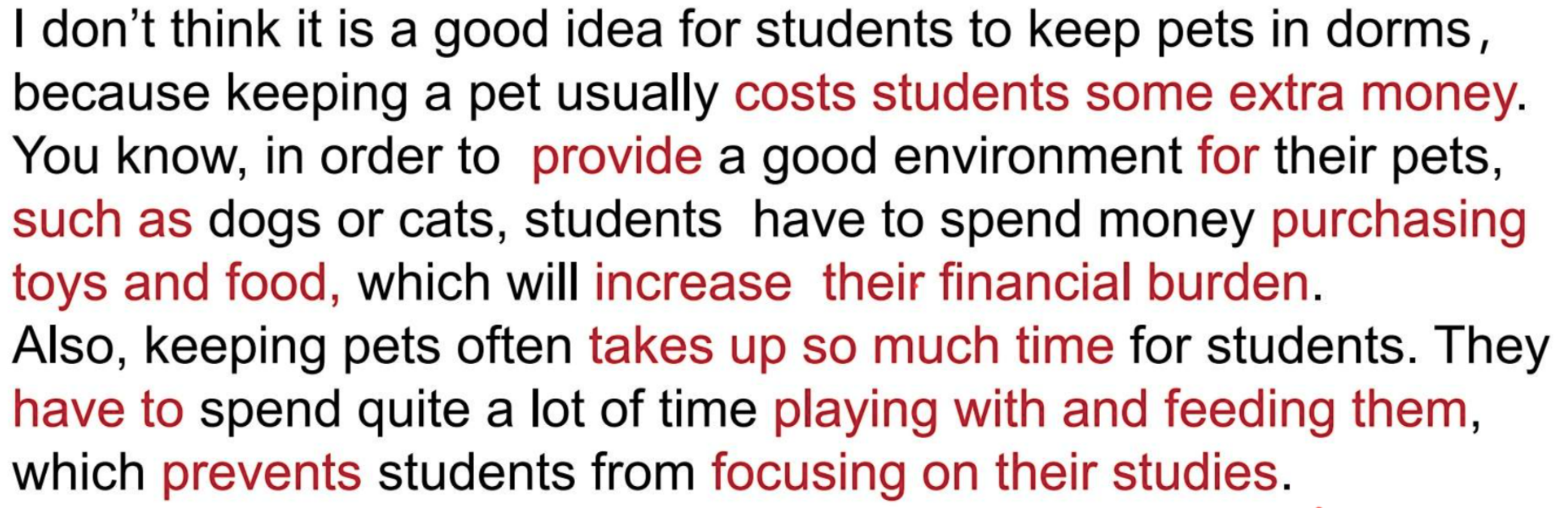
When something costs time and energy:
Should one keep a pet?
Should one learn an instrument?
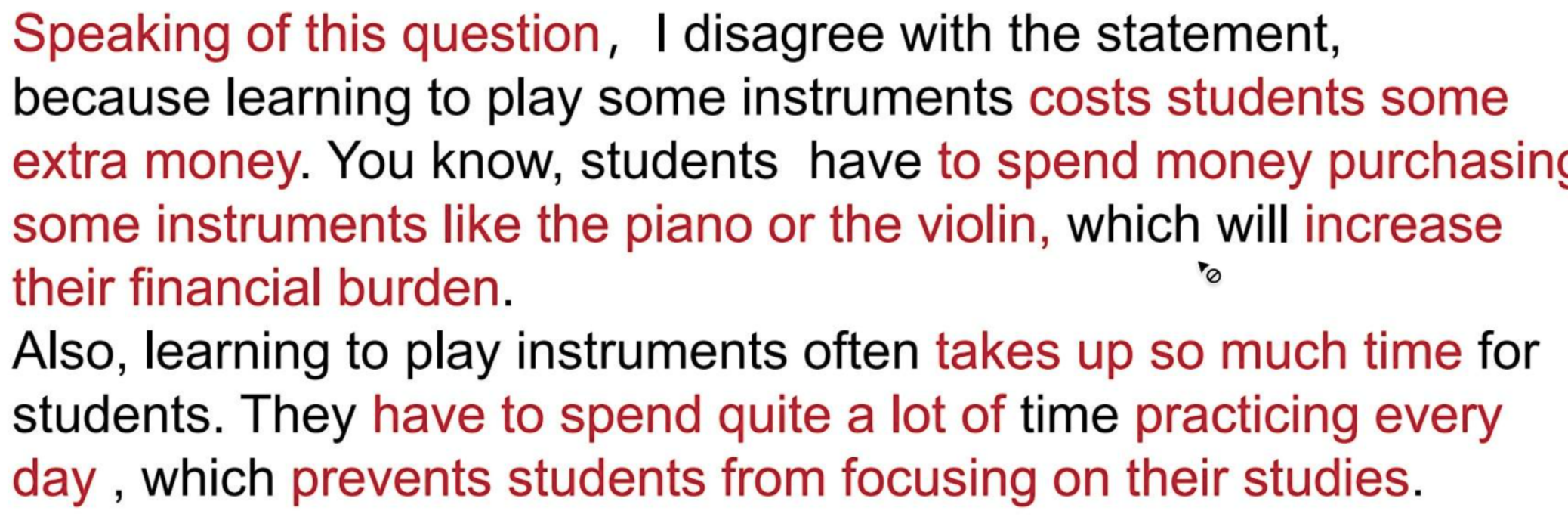
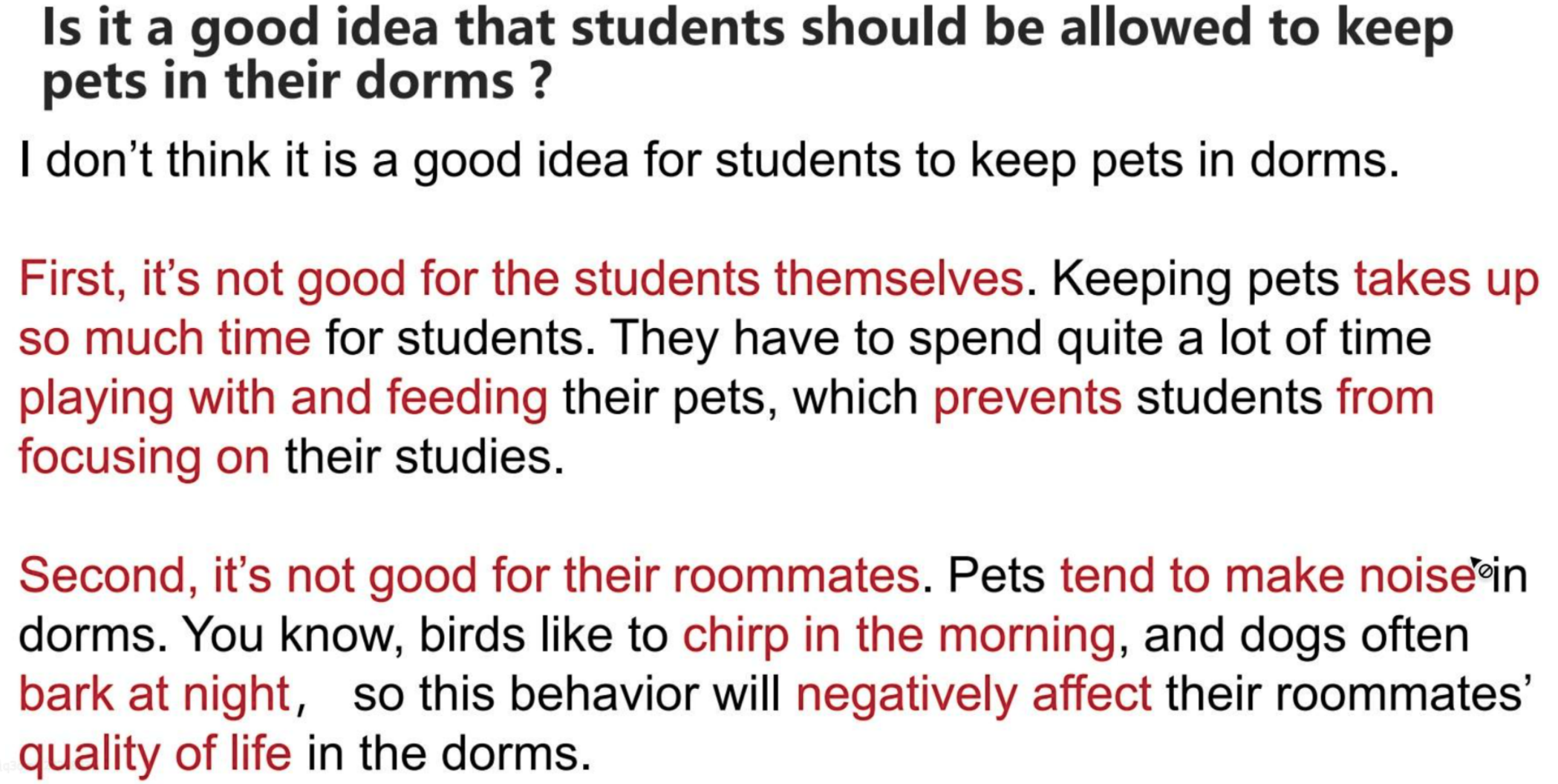
Method 1: identify different losers and beneficiaries:
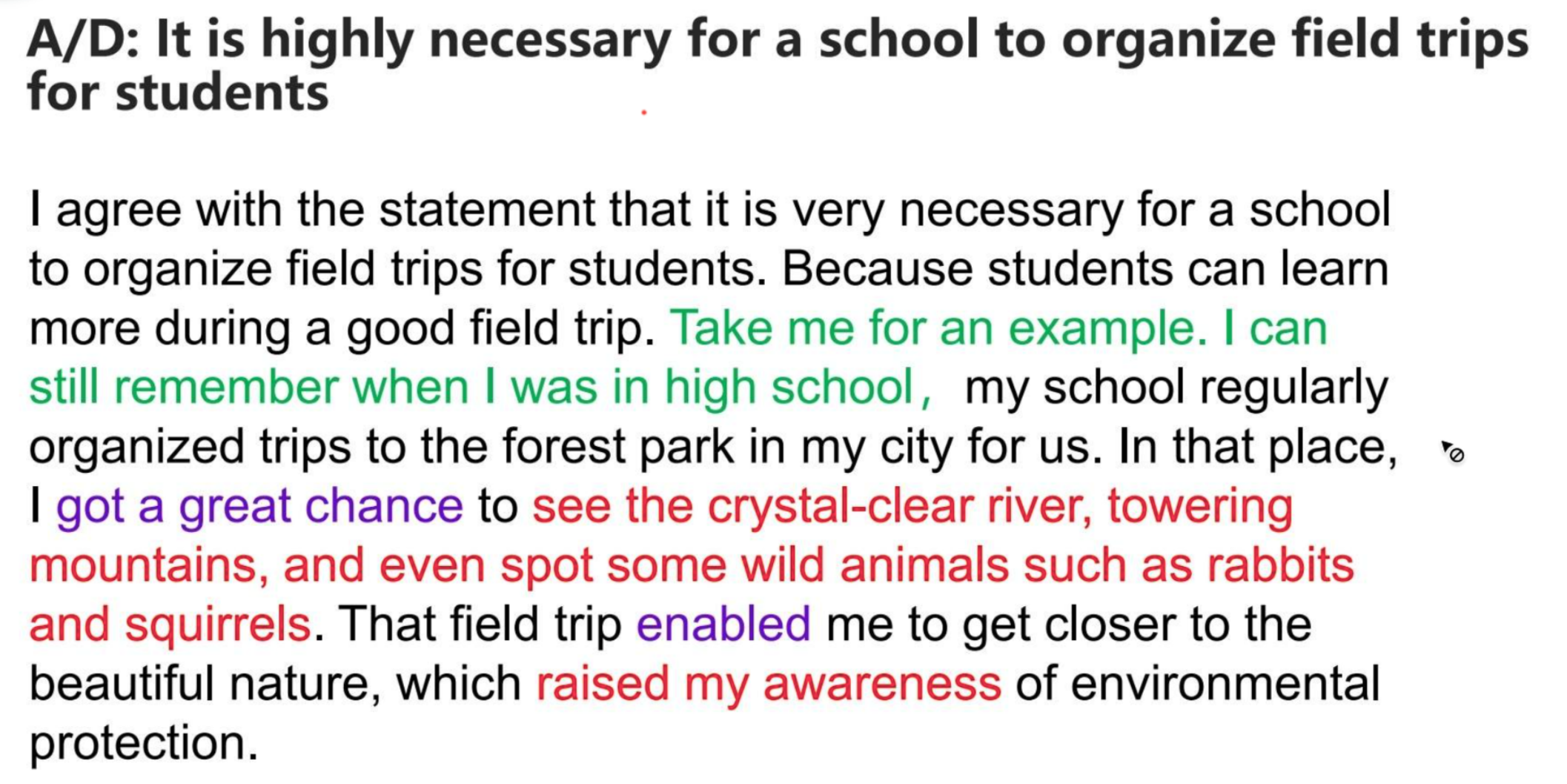
Method 2: tell a concrete story to fill time:
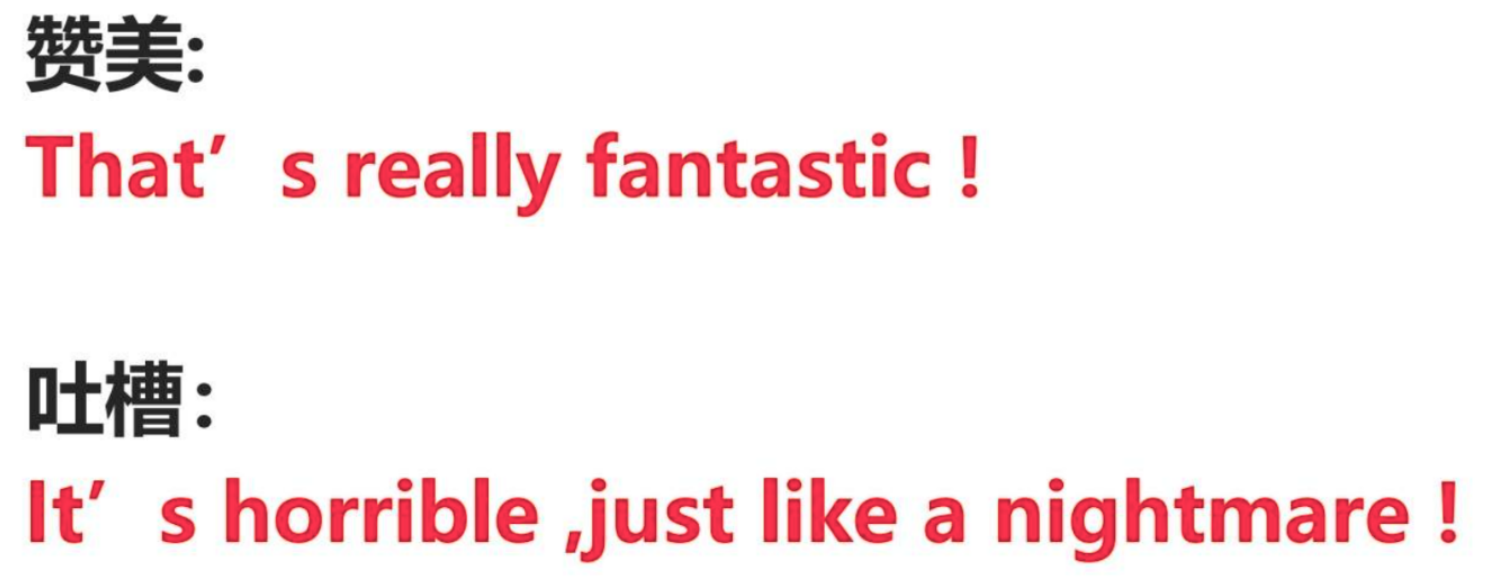
Add some emotional sentences:
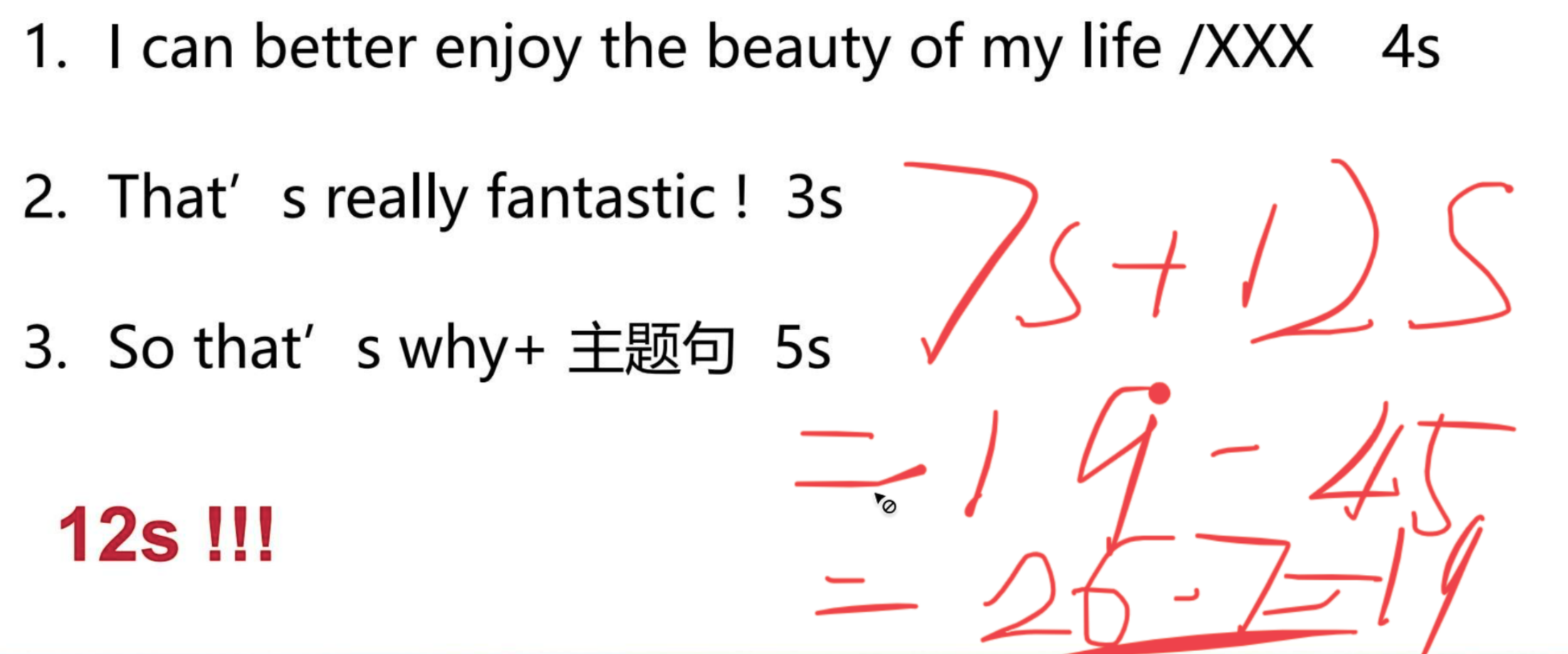
When out of content, force-fill the time:
Common Material #
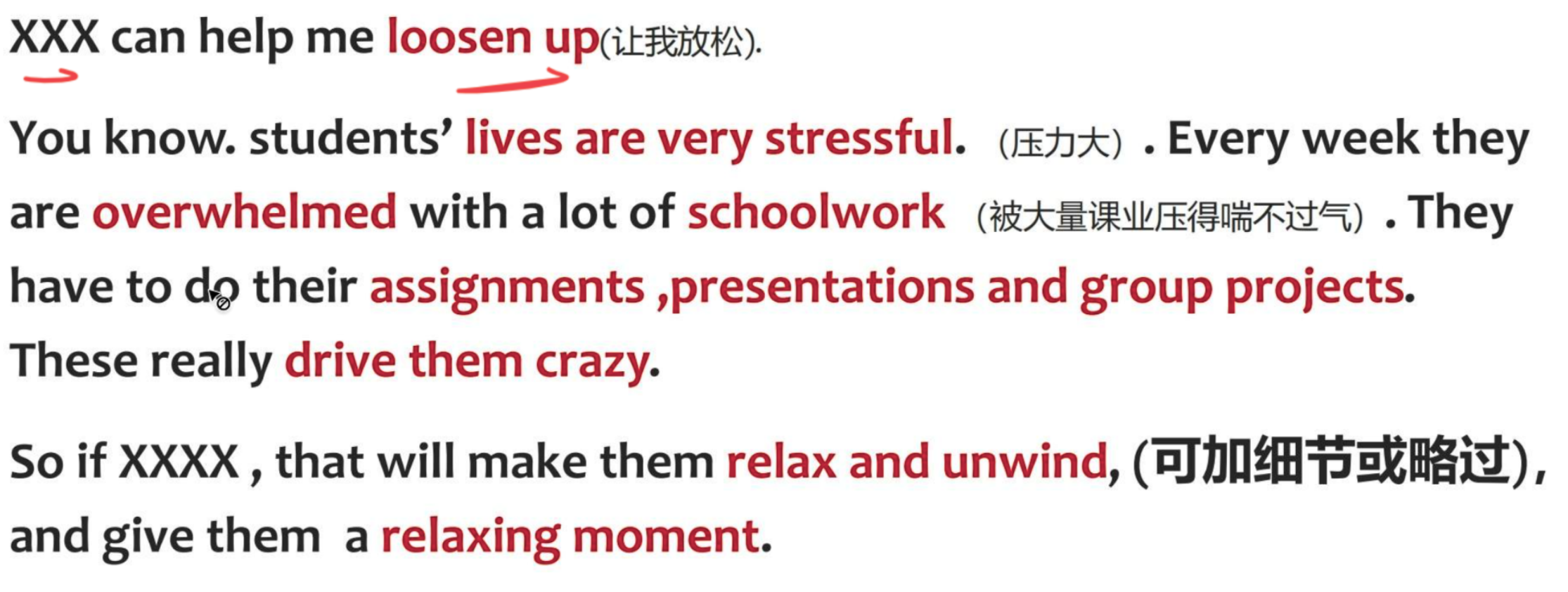
Entertainment / leisure —> relax and reduce stress #
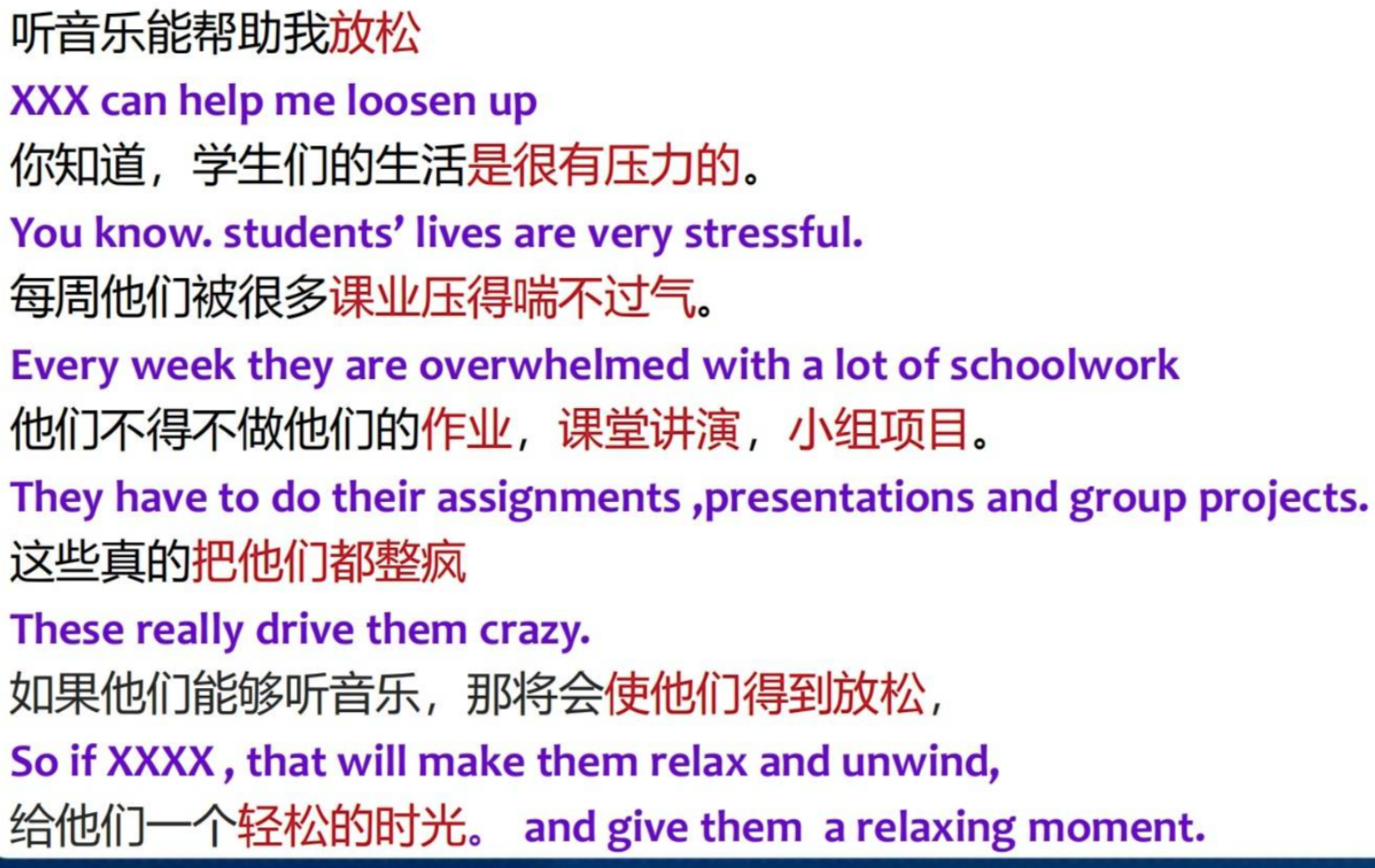
Work: projects tasks
relax and unwind
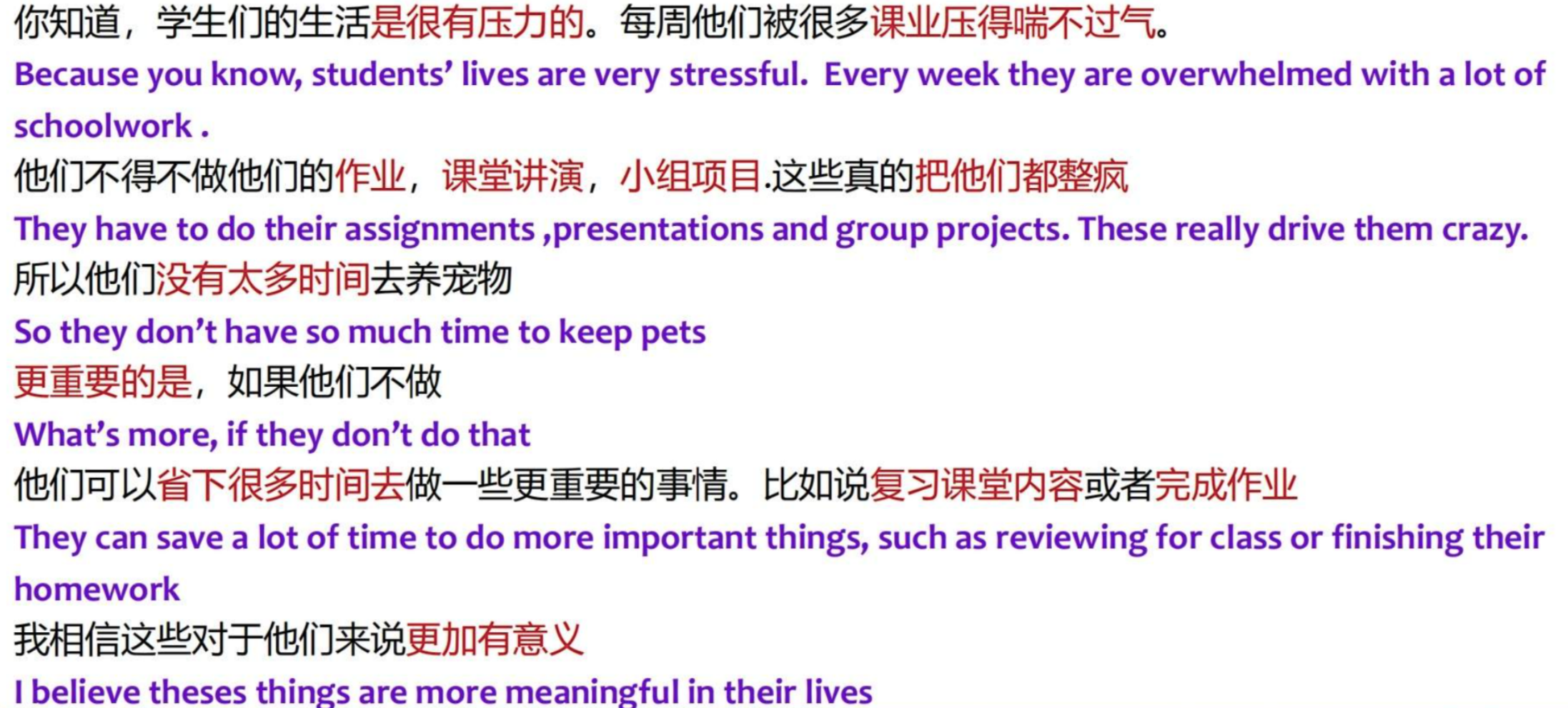
Save time for more important things. #
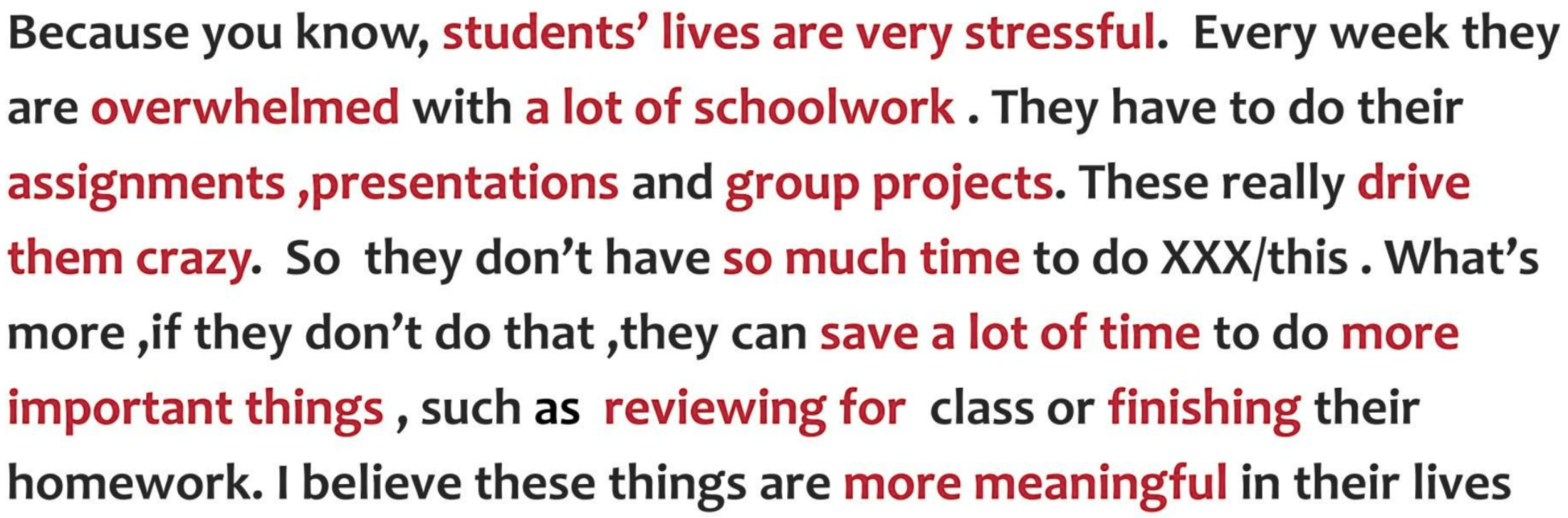
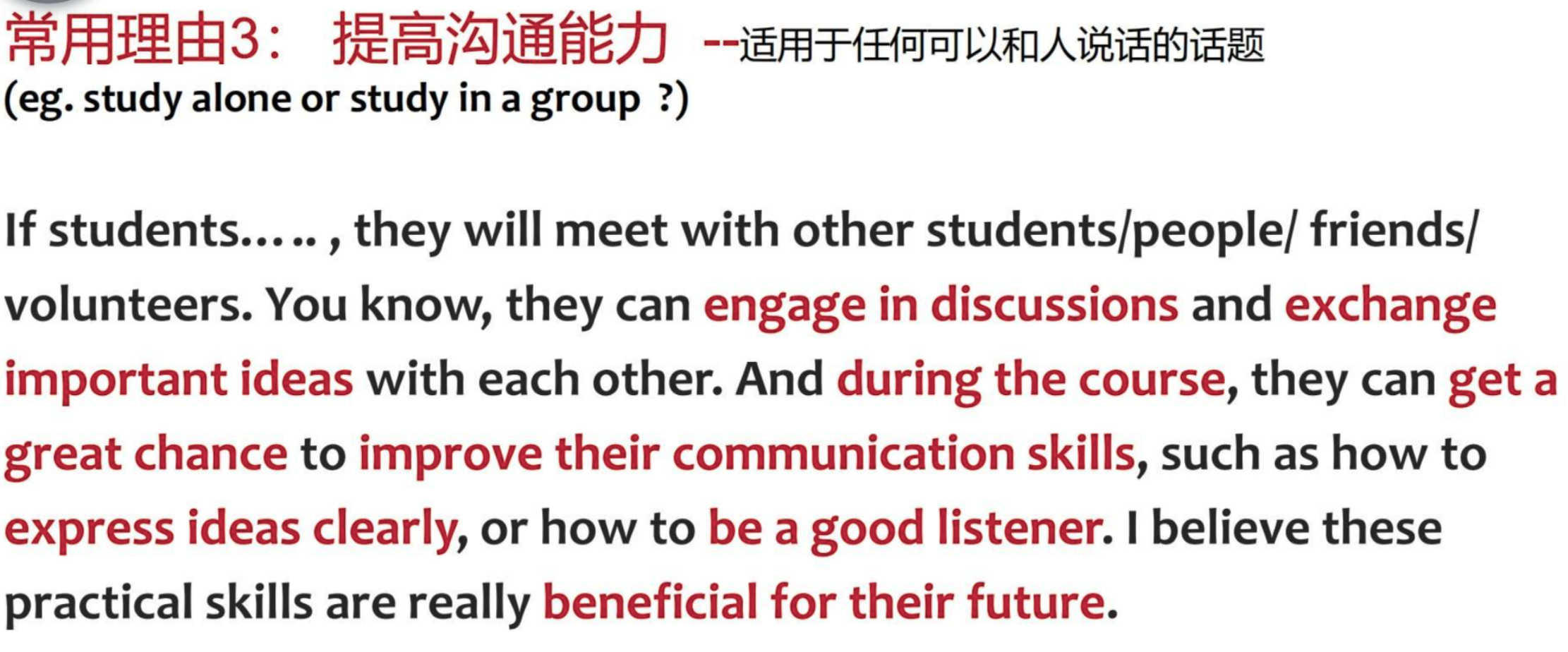
Improve communication skills #
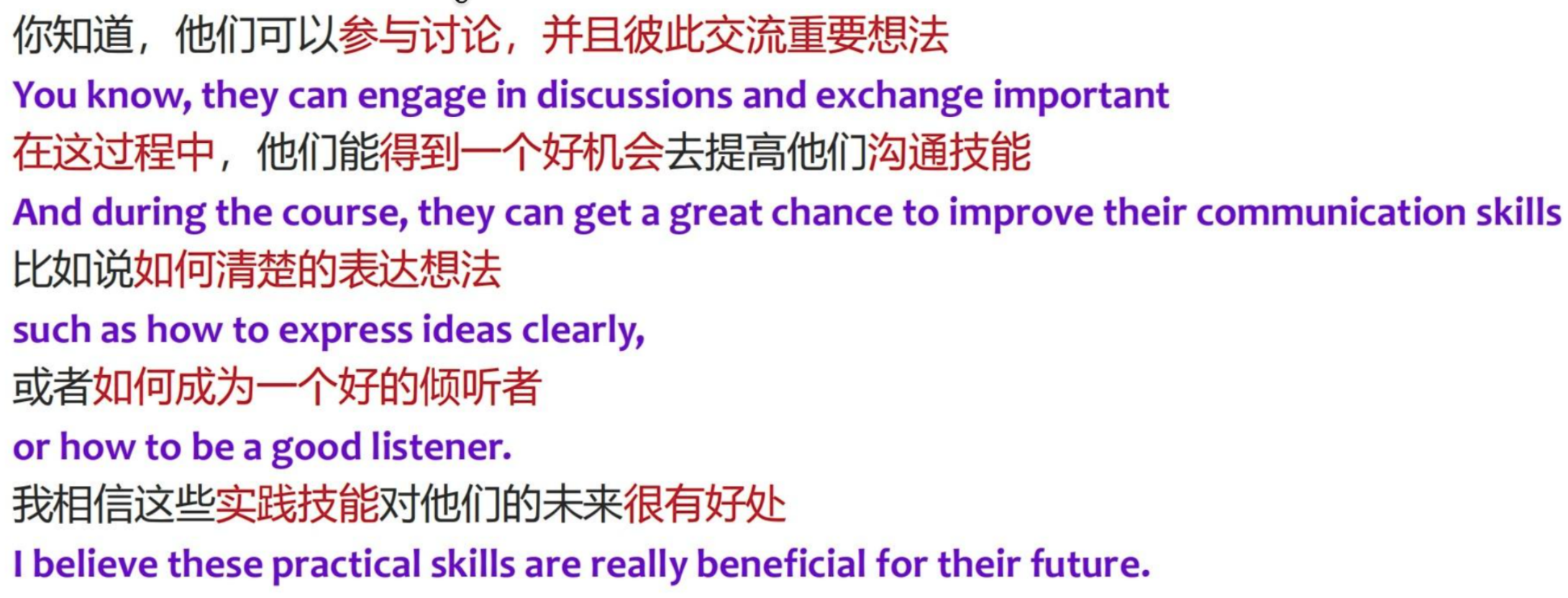
during the course
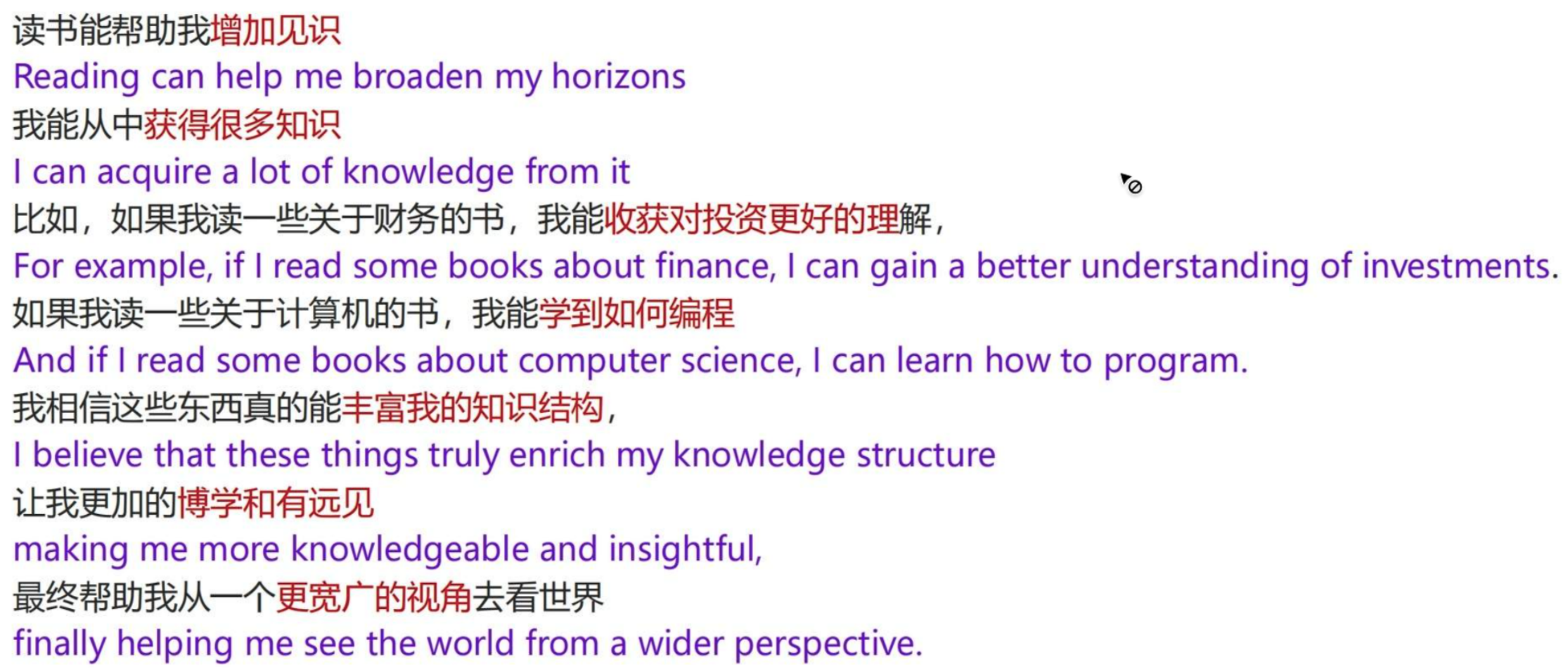
Broaden horizons #
Task2 Conversation Opinion #
-
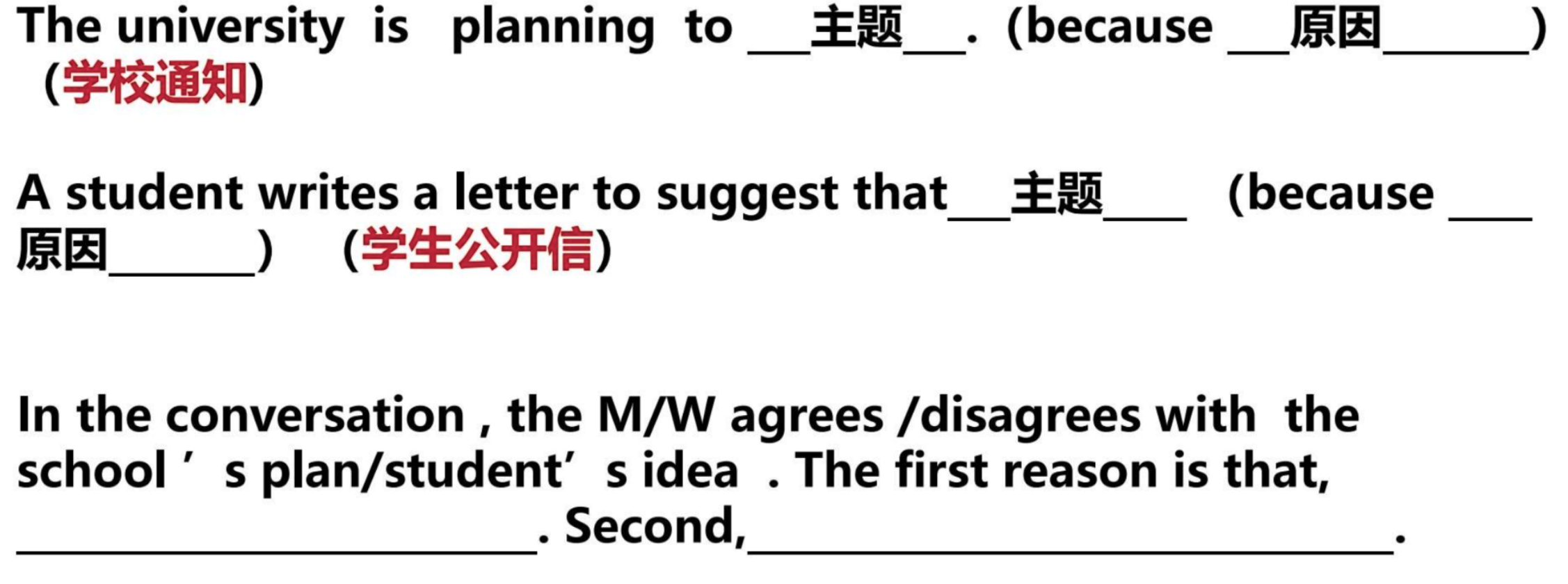
Note the topic
-
Understand the stance; take notes
Clarity beats completeness.
You can ignore the timer.
Speed notes
Drop vowels—common among native note-takers too
food fd
week wk
room rm
reward rwd
housework hswk
nbhd
Here you need to learn more new expressions.
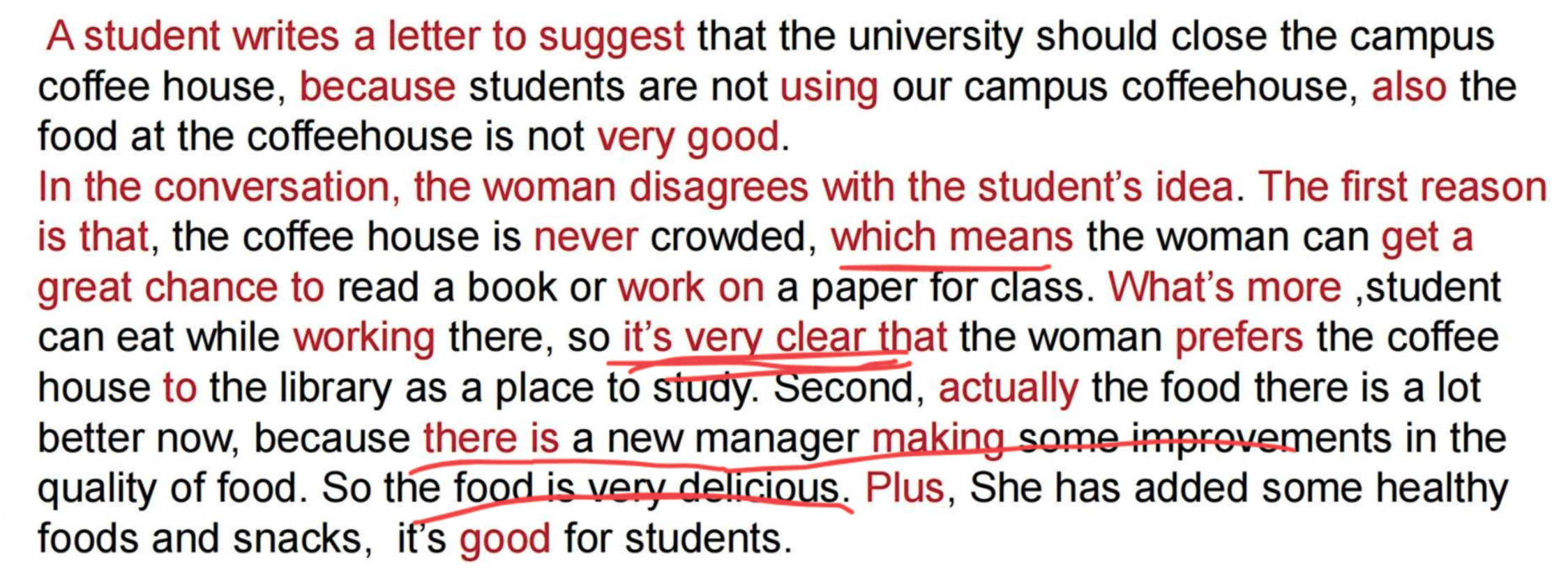
Student suggestion letter:
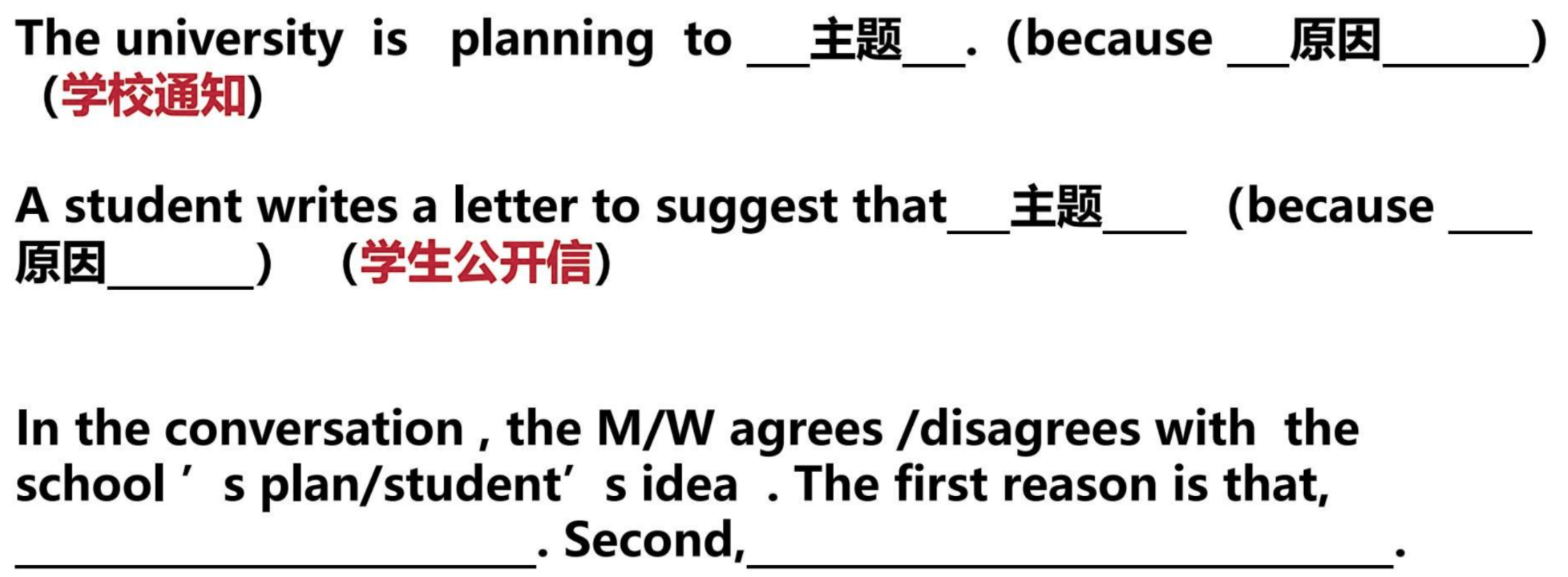
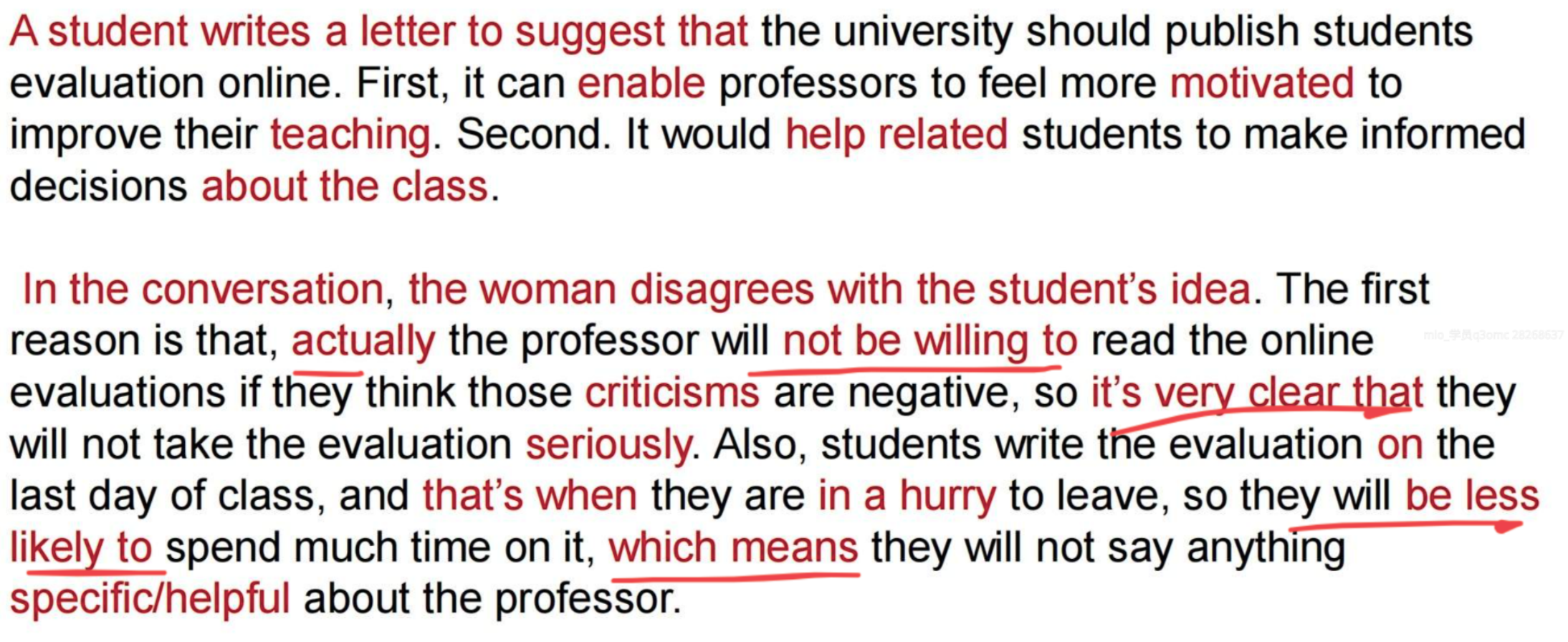
Student’s proposal
Task3 Academic Concept Explanation #
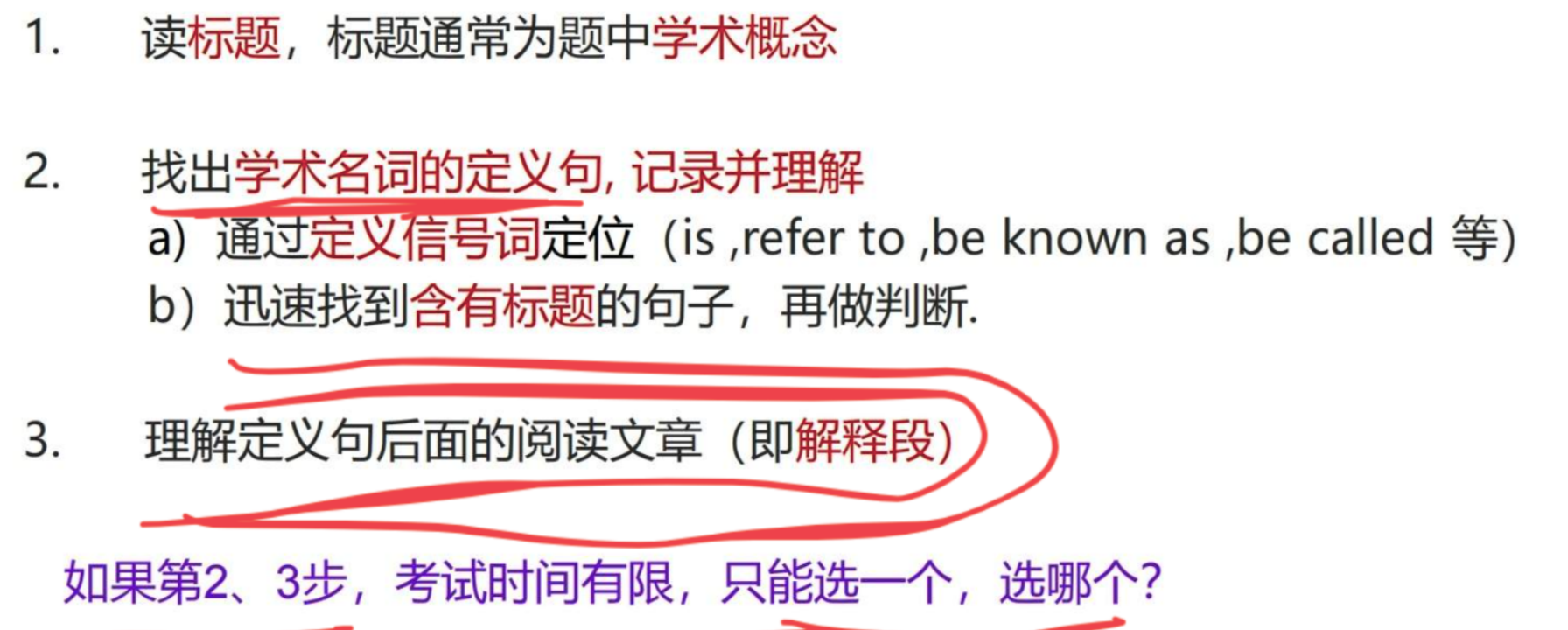
How to answer:
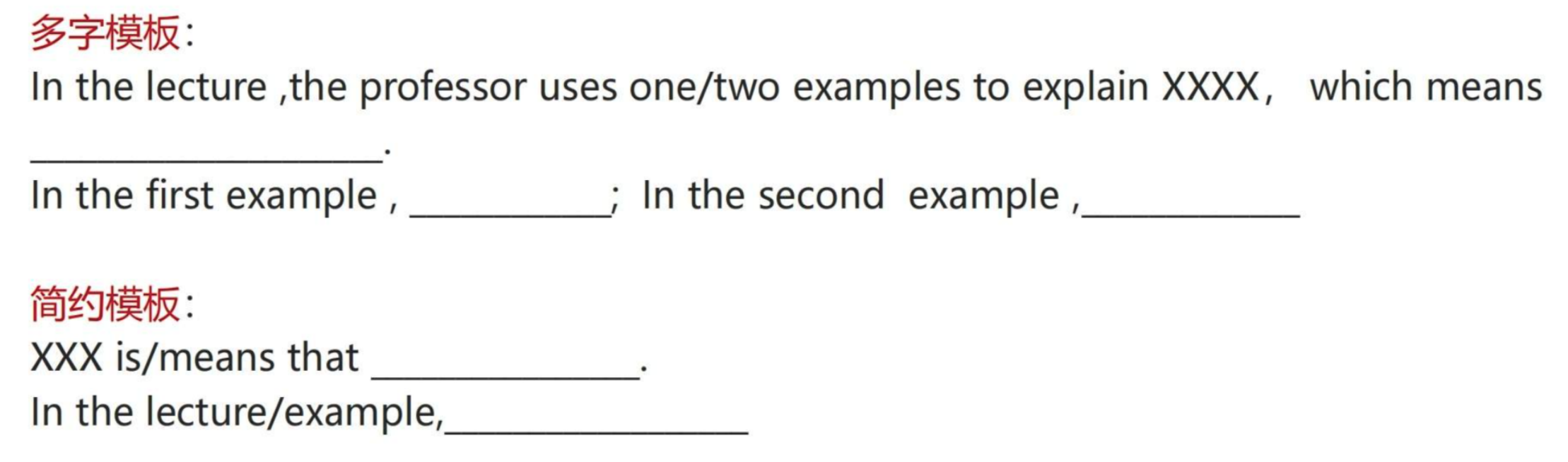
A model answer:
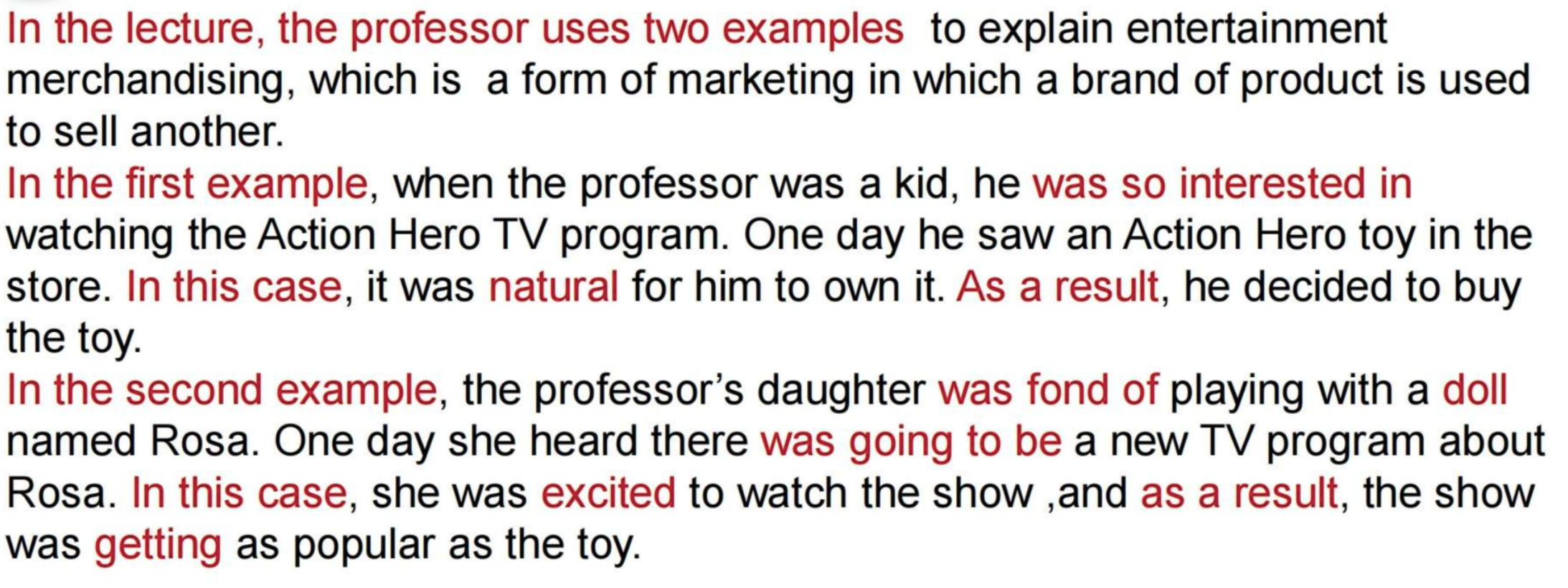
Key phrases:
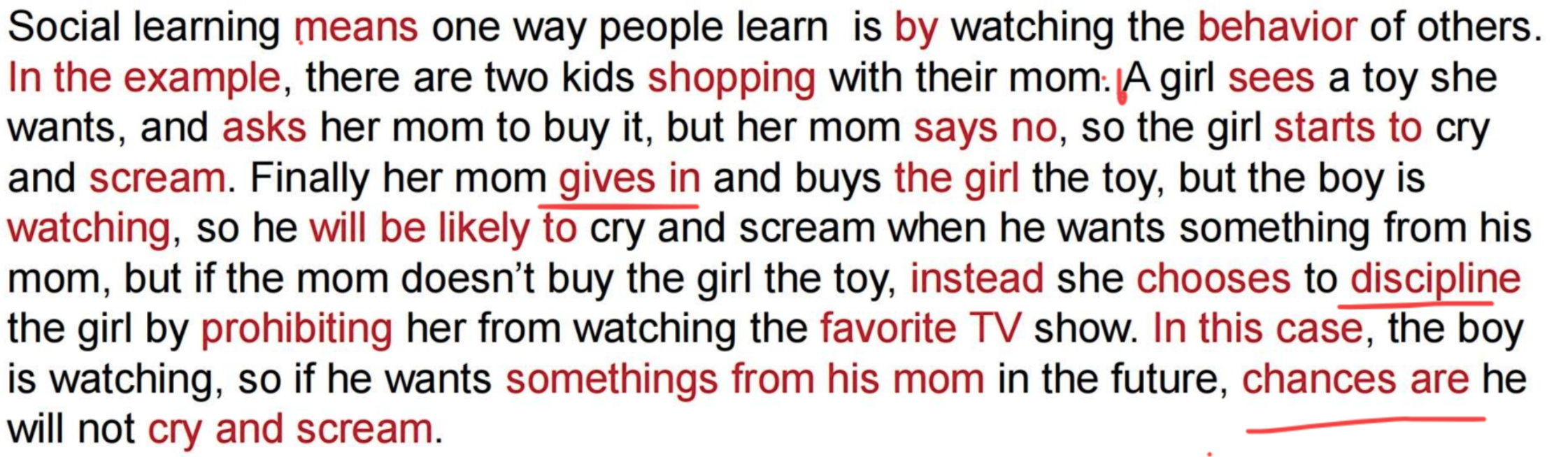
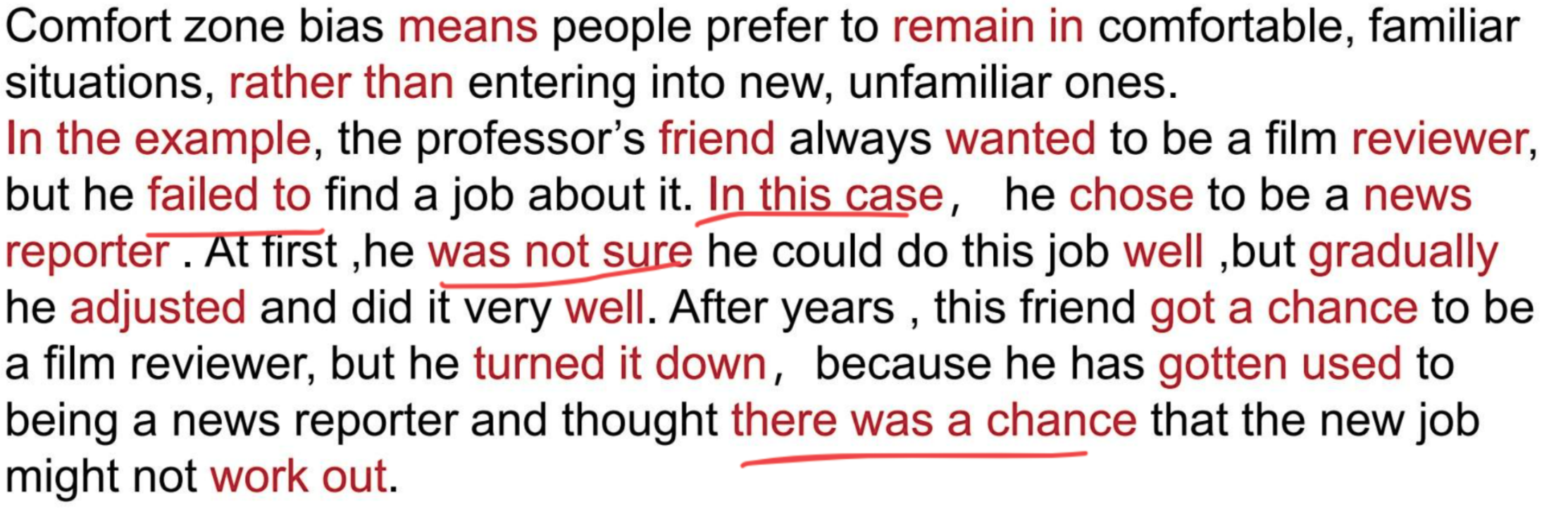
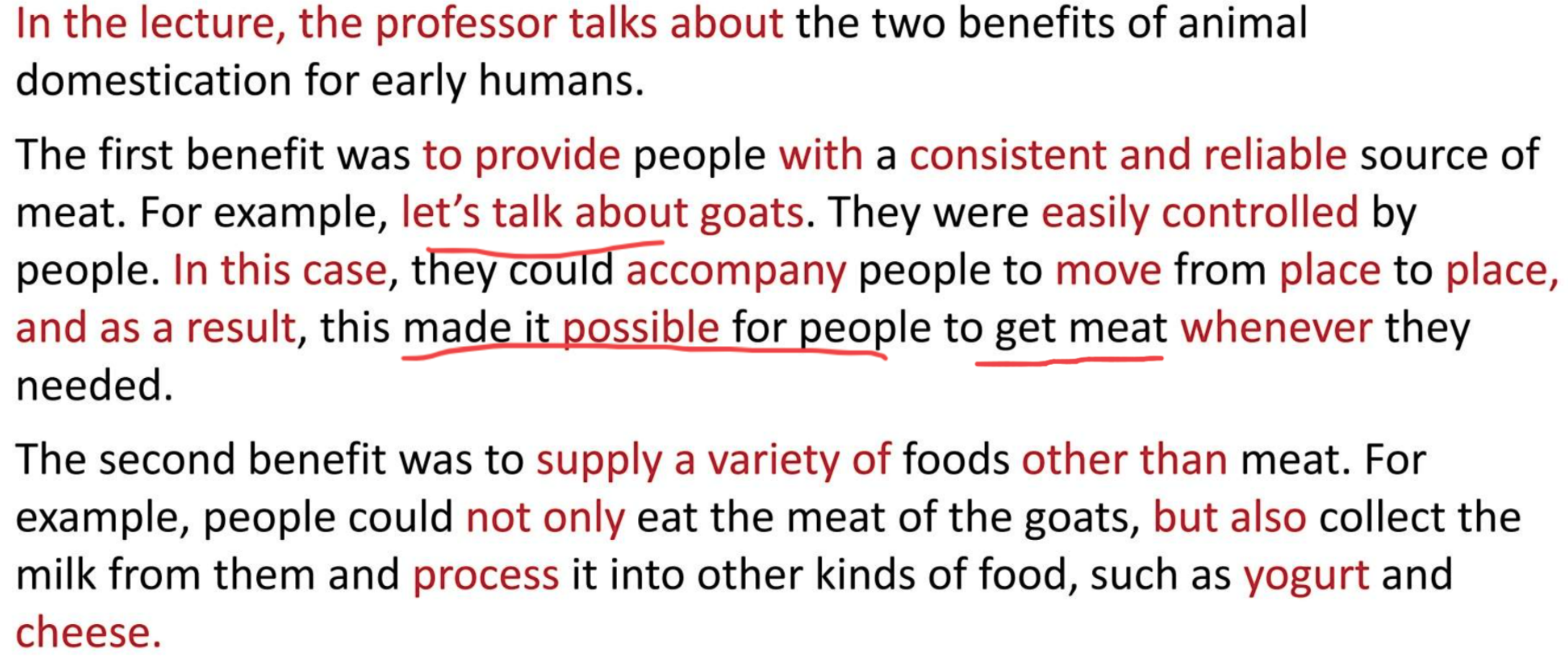
In this case……
as a result……
which means……
Chain sentences together when you blank out.
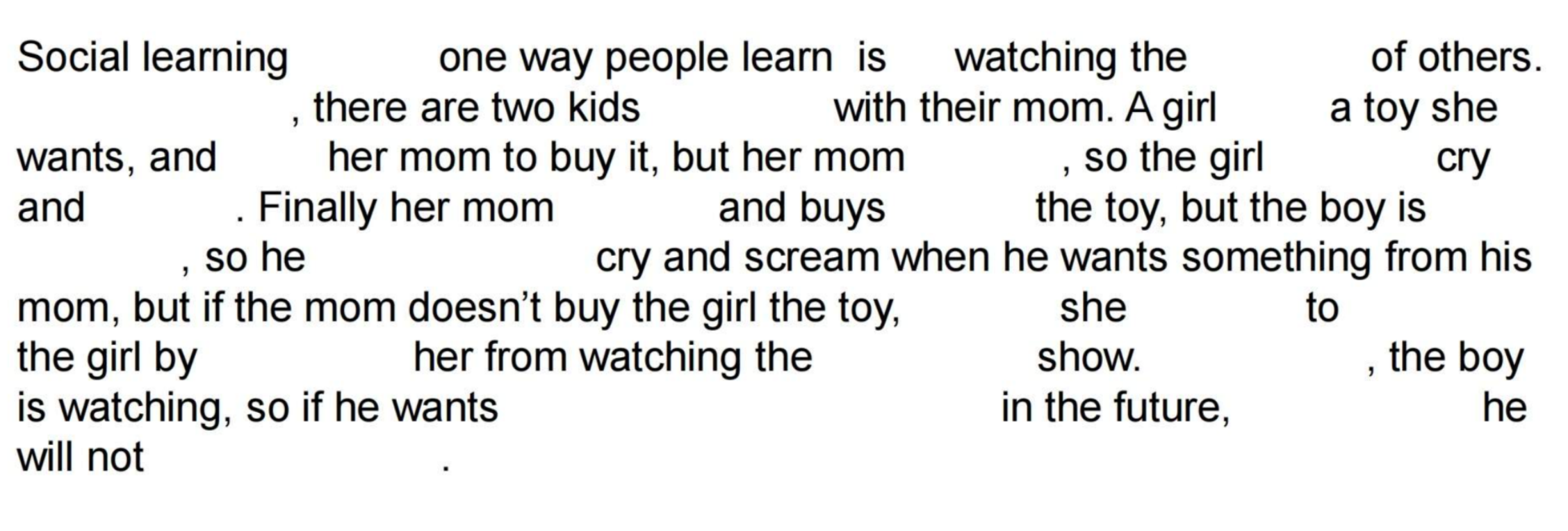
Expressing liking:
be fond of……
chances are—high probability
Task4 Academic Lecture Summary #
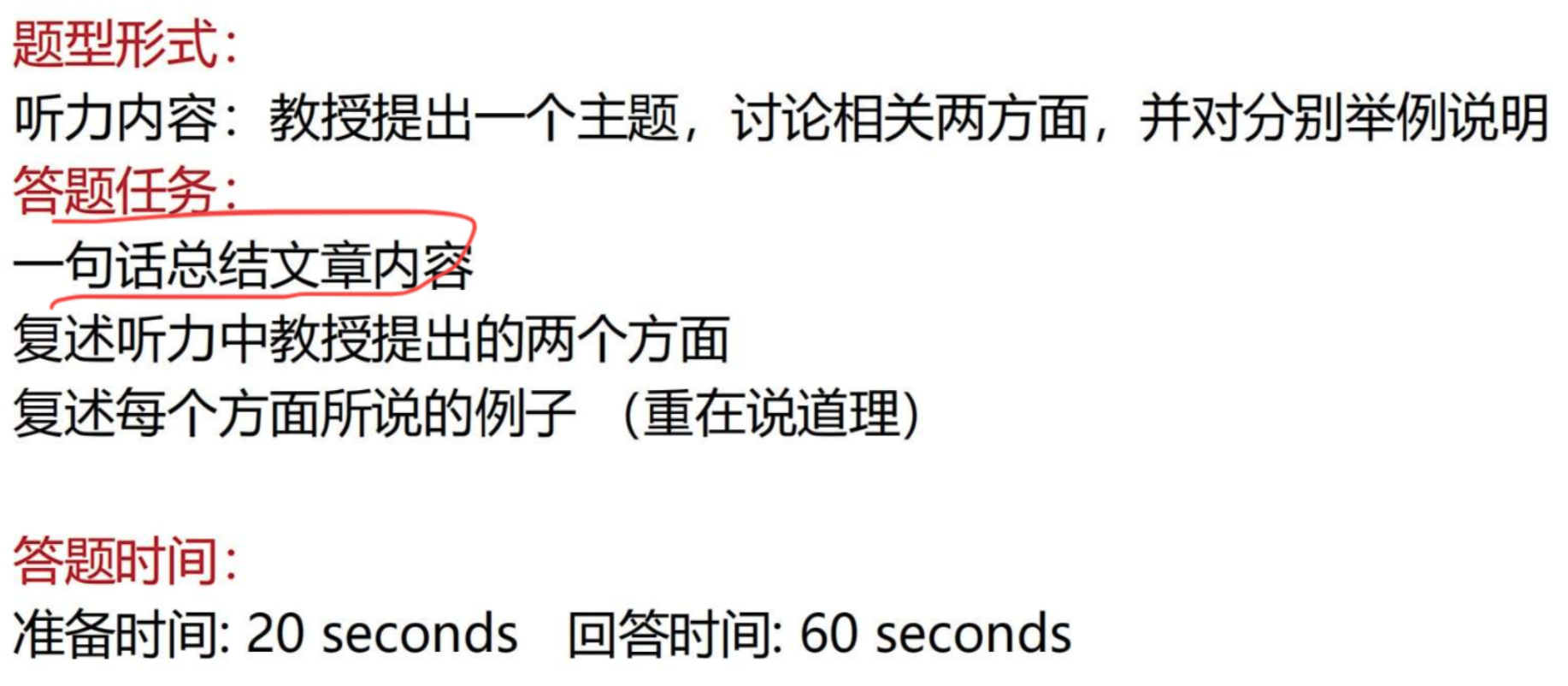
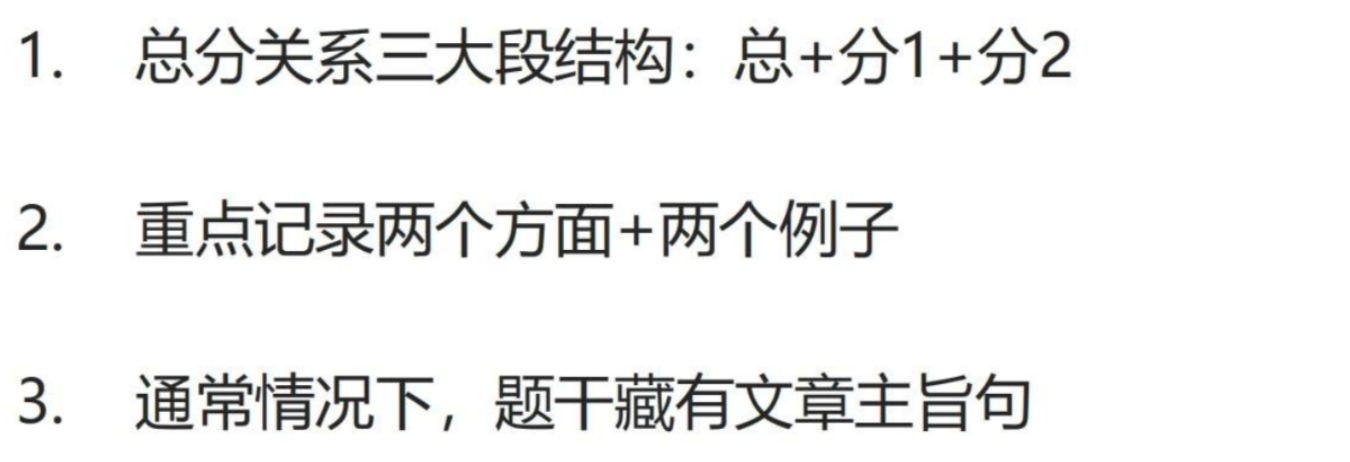
Basic template:
Start from the prompt or a short summary.
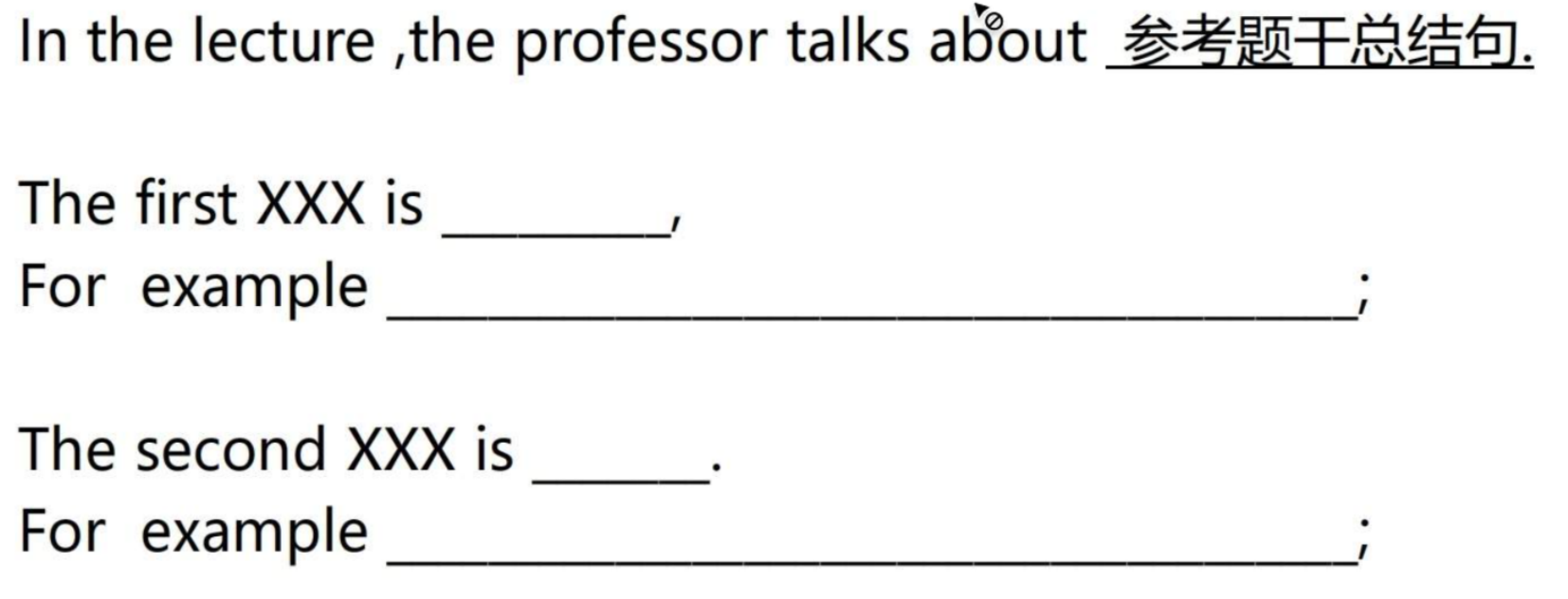
Clarity first—if you cannot cover later points, skip them.
- Deep-sea organism survival
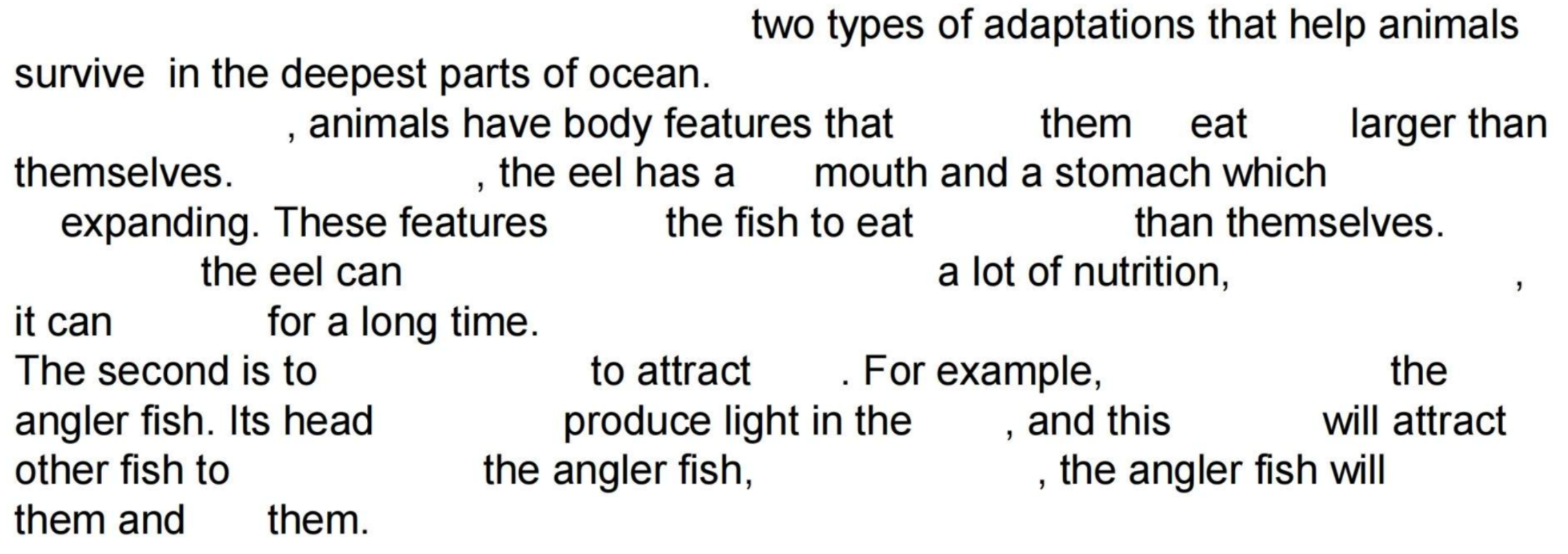
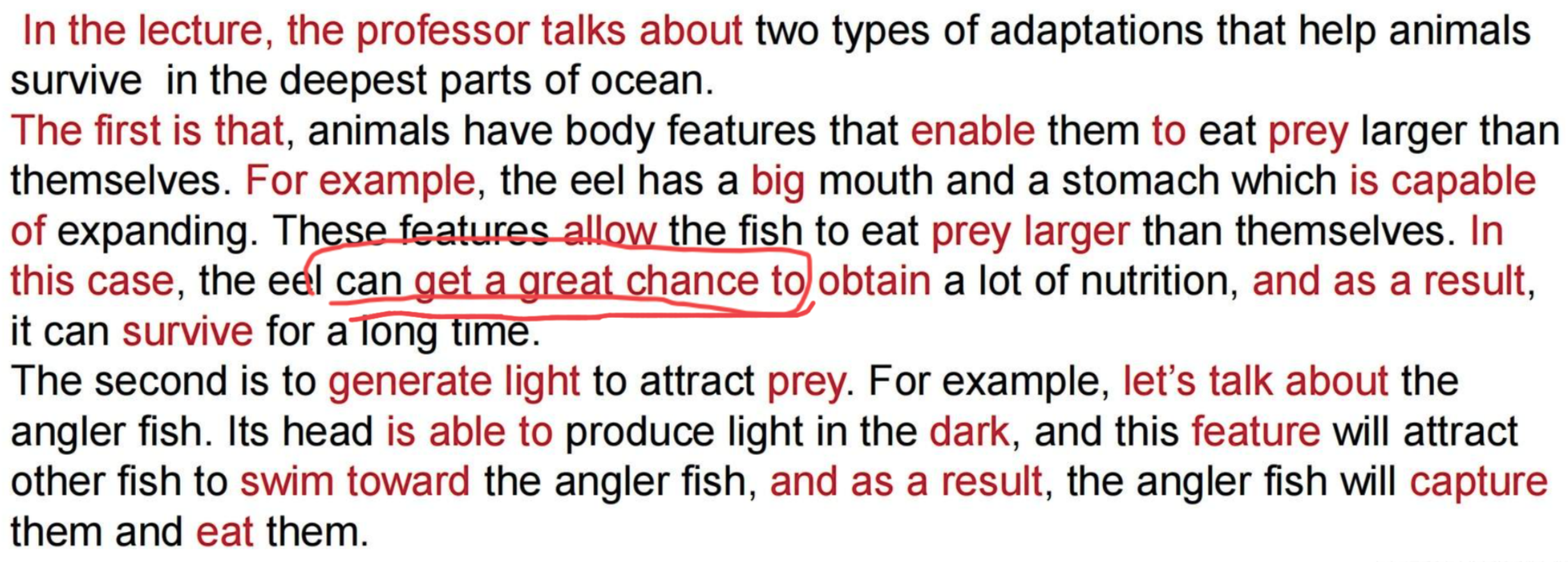
Buffer: get a greate
Example cue: let’s talk about
- Target customers
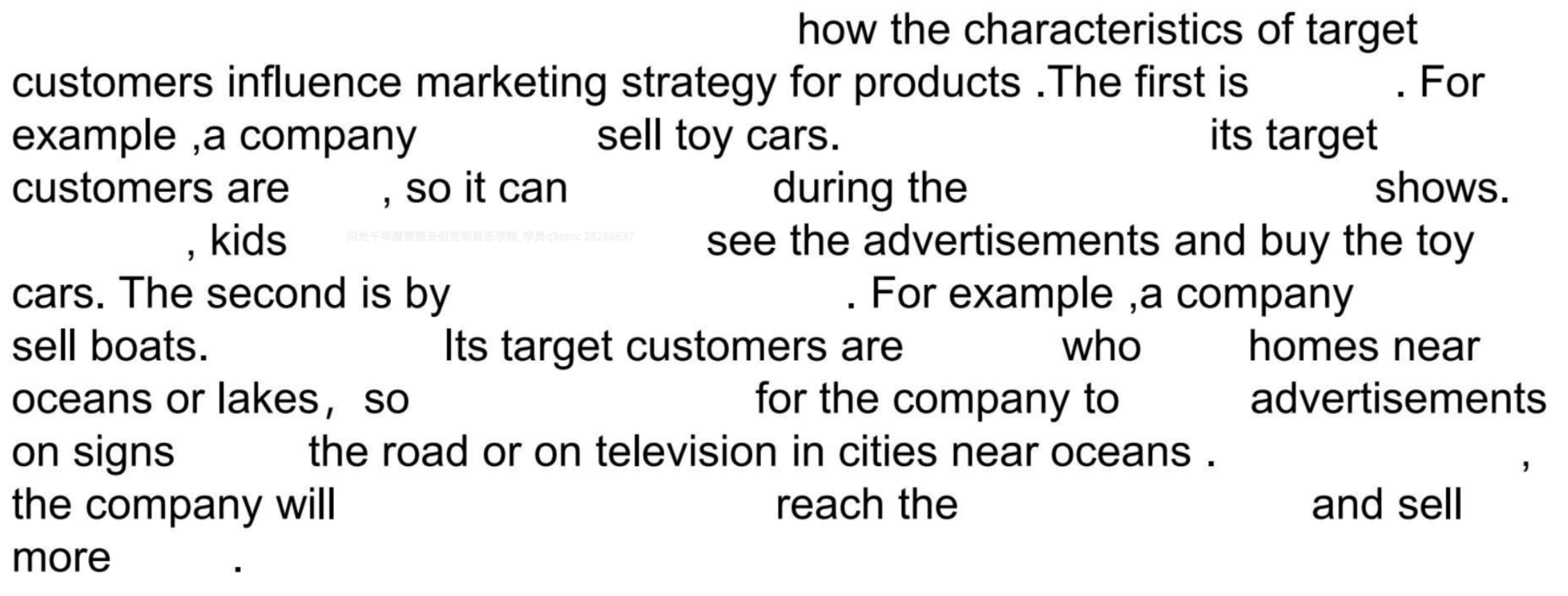
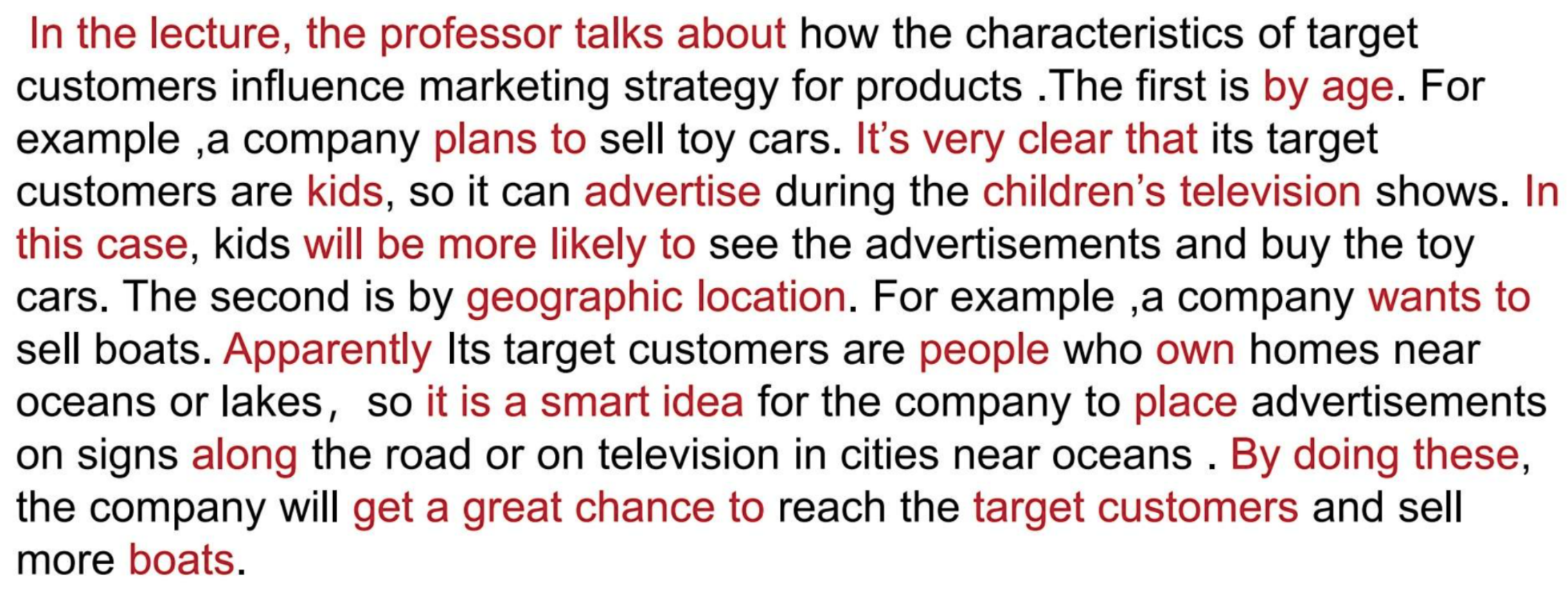
It’s very clear that……=Apparently
- Ancient animal domestication
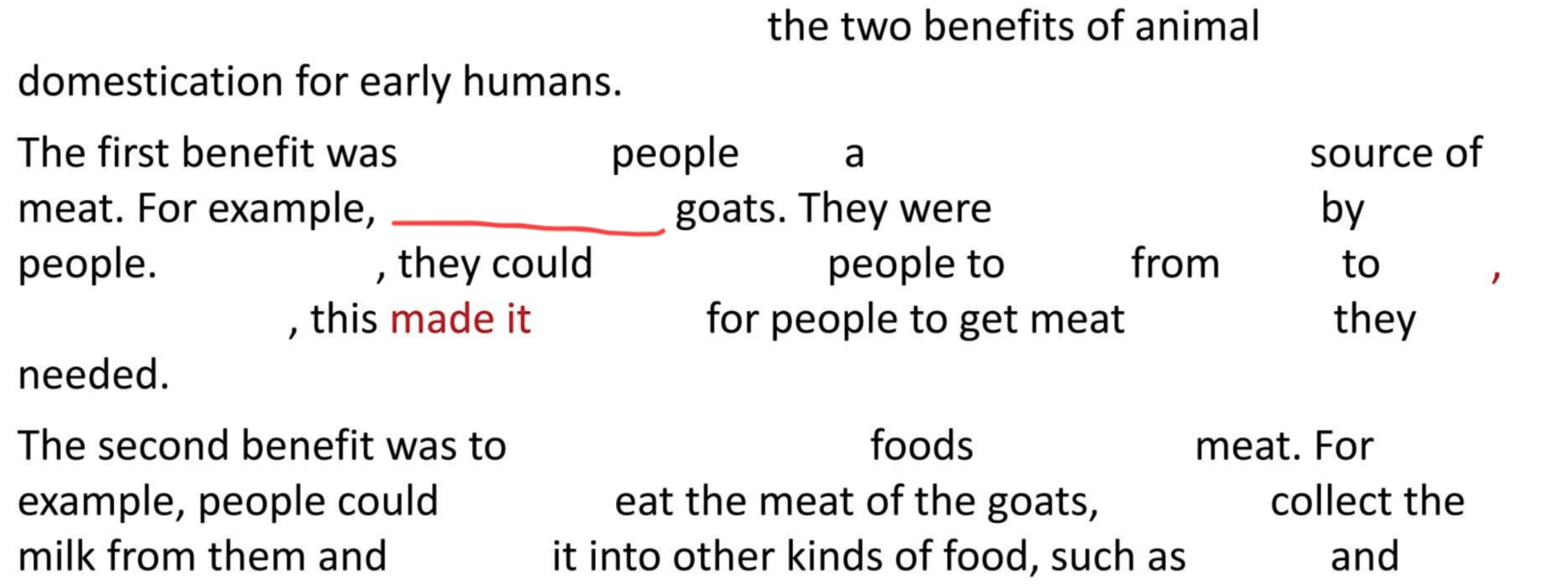
Writing #
Practice methods:
Vince on Bilibili.
30-day WeChat public-account drills.
Sentence Bank #
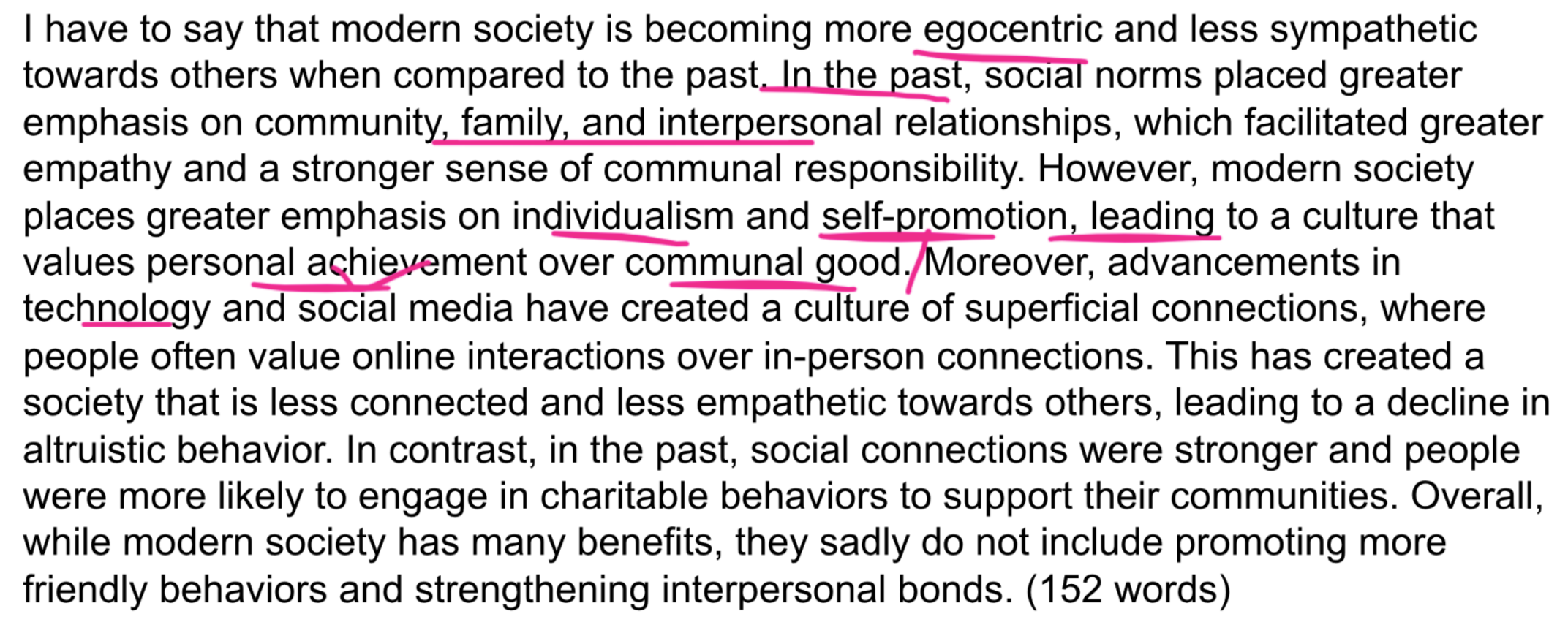
Social-issue analysis:
Use parallel nouns + precise adverbs
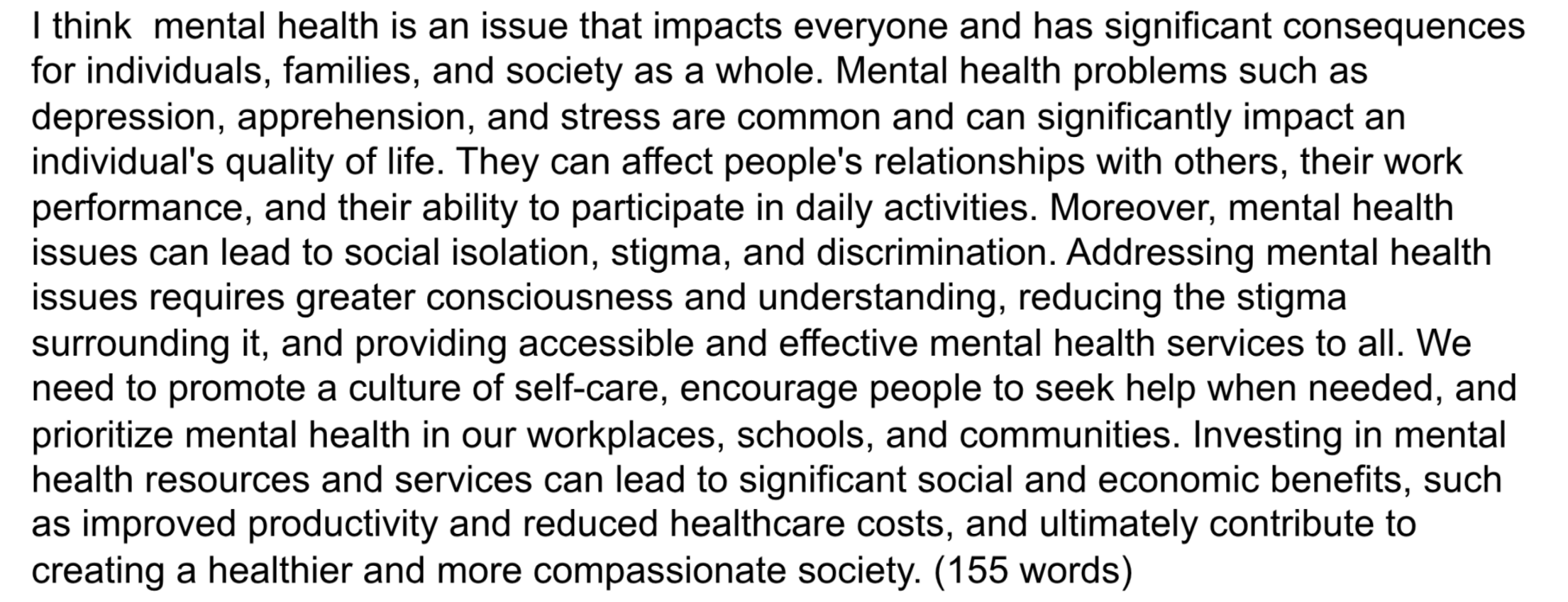
Tradition conflict: set off fireworks
Topics are abstract; write detailed examples.
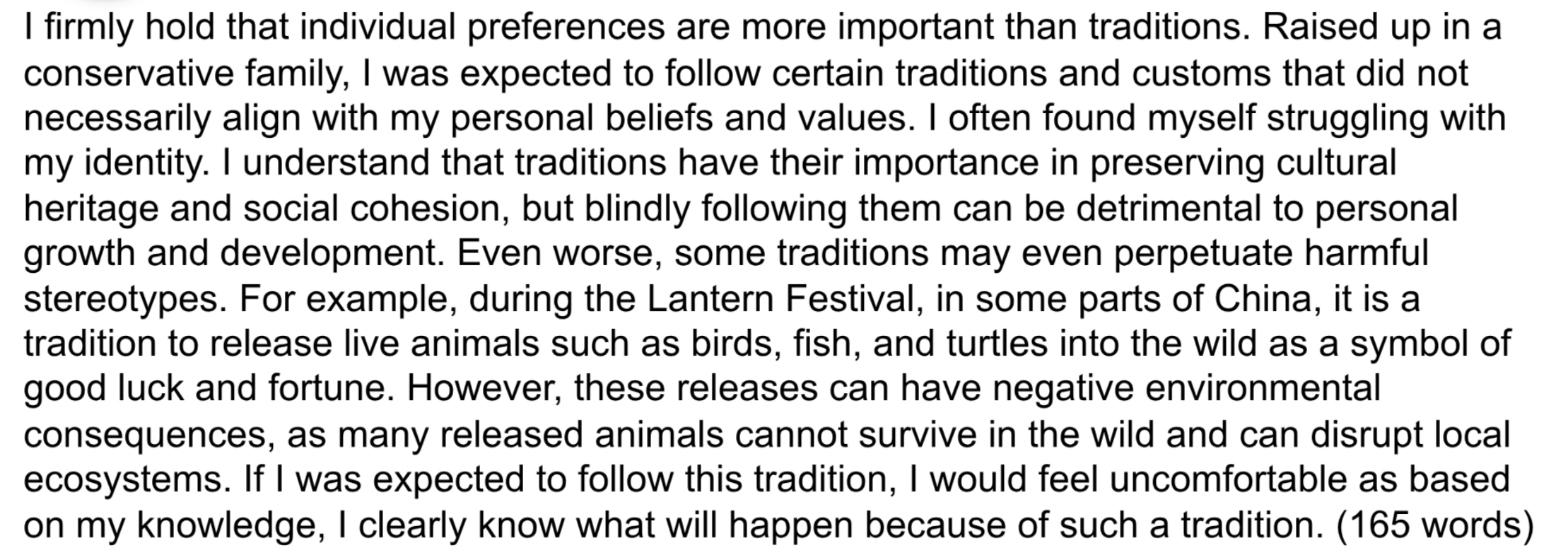
A more selfish or more altruistic society:
Academic Writing #
Clear expression; relevance; coherence.
Strict plagiarism checks.
Explanation, examples, detail.
Varied, accurate, idiomatic wording; few grammar or word-choice errors.
Keep it short; prioritize logic.
Closed vs open questions
- Closed questions: choose a side two views —> after choosing, develop a new angle (you may expand the original view in detail, but that is discouraged—go deeper)
Choose A: concession + refute B, but make your own stance clear
- Open questions: you may choose, or give your own view —> state a clear position (if you can invent examples, it is open)
Is A good? —> a moderate answer is fine.
What is A? —> decide what it is.
Argumentation Techniques #
Topic Sentence:
-
Write a complete sentence: I agree with the statement that + ……
-
should be an abstract view point
-
needs to be concise
-
guides the whole paragraph
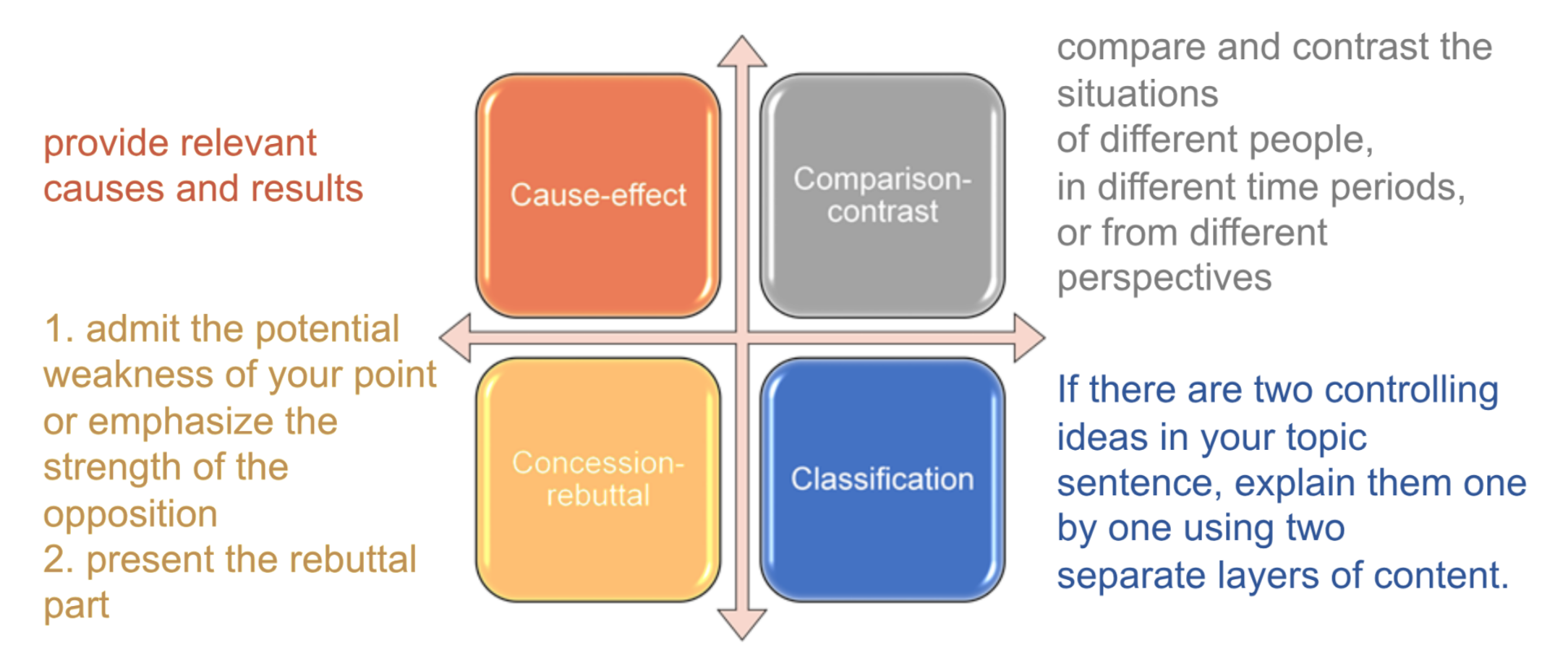
Cause and effect:
get access sth / access to sth
because of thanks to Since Because
Contrast:
In addition…… furthermore……
For instance…… for example……
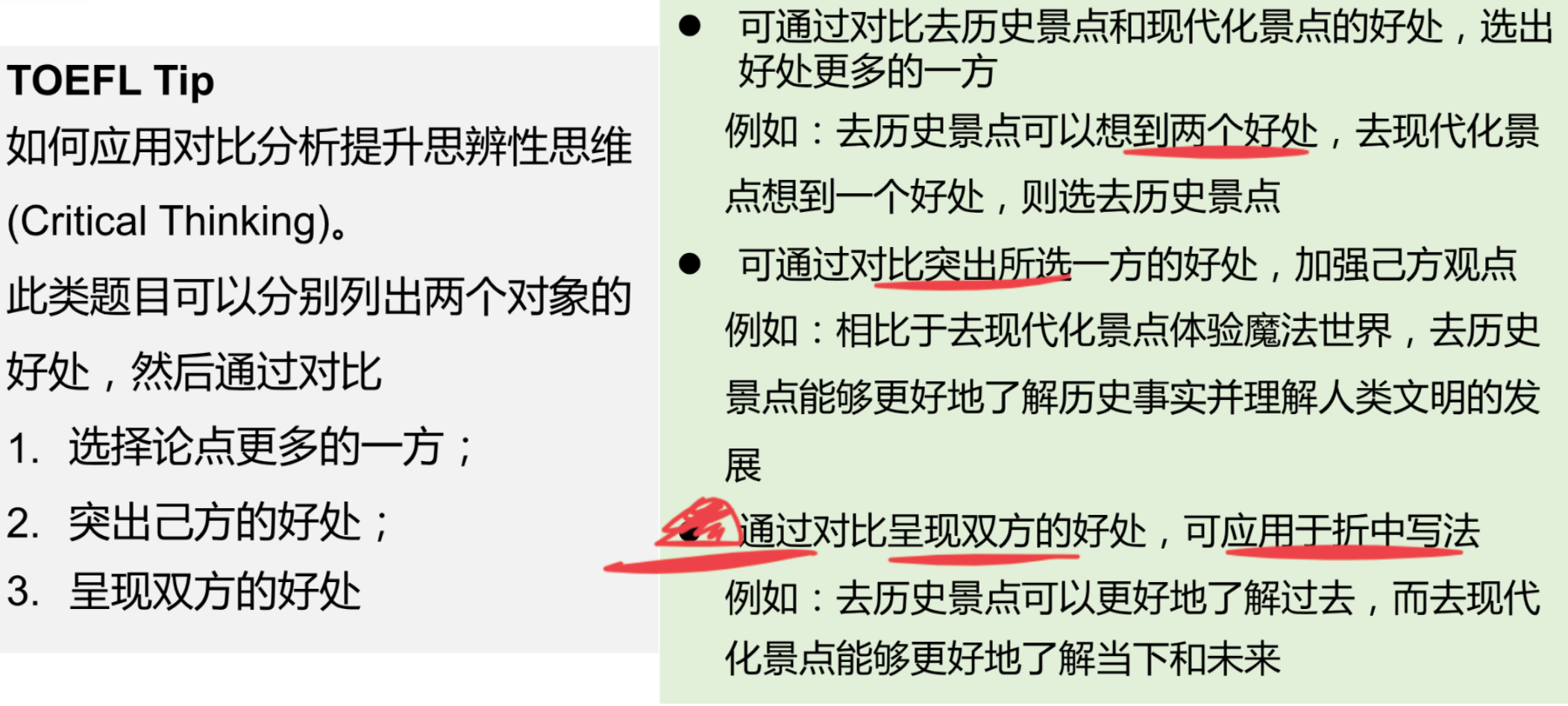
Unlike the modern spots, the historical sites usually show(provide exposure to) long history and impressive culture to the spectators.
sb be exposed to culture./sth provide exposure to.
Compared with……
By contrast……—> introduces a contrasting line of thought after the previous sentence
Contrary to the common belief that……—> introduces an opposing idea.
Concession–turn.—> useful; more dialectical.
Case-by-case discussion: (classify, but avoid pure negation of others)
Integrated Writing #
Hypothesis type / pros-and-cons type
Take brief notes—copy English keywords
plausible seemingly reasonable but possibly wrong
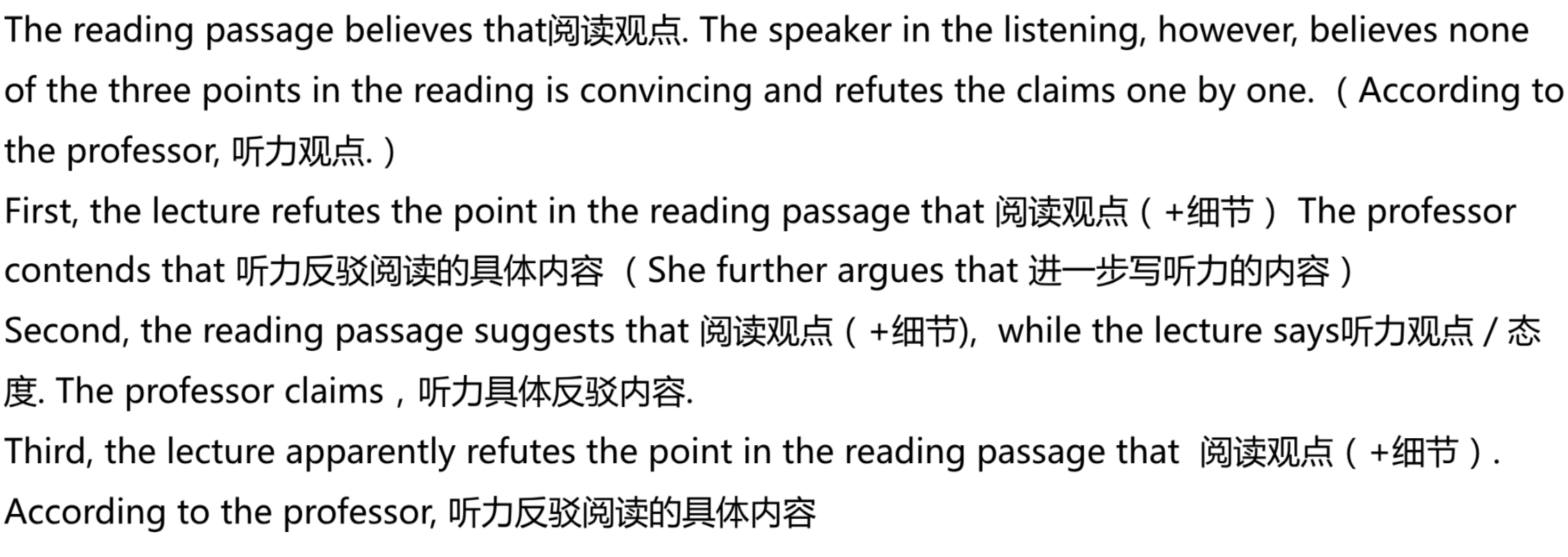
The lecture rebuts the reading point by point.
Still listening-heavy—> the more detail the better; write furiously what you hear
Rewrite the reading; for listening, write the original wording when possible (paraphrase if you cannot).
Listening #
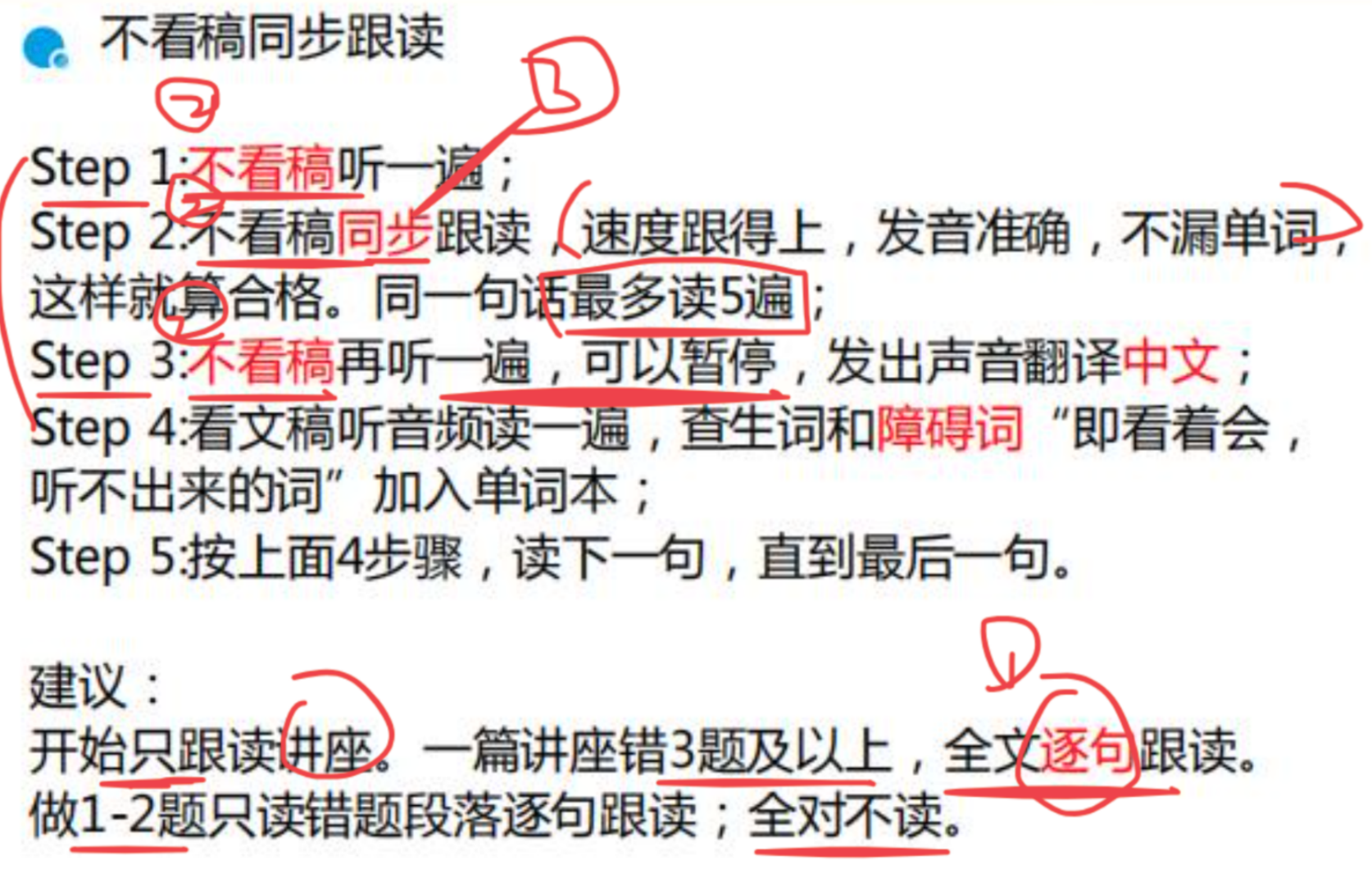
Vocab + background knowledge + practice
What kinds of words to note:
-
Contrast / turn words
-
Negation words
-
Extreme words
superlatives, comparatives, ordinals
Conversations #
Office Hour #
S-P
S-E
Three elements:
-
People
-
Setting—place, time, etc.
-
Plot
? problem R reason S suggestion / solution
Persona: undergraduate
1. major 2. year
subject:
Anthropology: Clovis native american
Ancient people:
-
arrival in the Americas
-
historical development hunting&gathering->nomadic (pastoral)&domesticate->agriculture
-
extinction climate, disease
Main-idea approach for conversations:
Read the question:
- why — purpose main idea, ~90% purpose of an example?
Ask who? who answers? (before entering; student’s first question)
Answer location: often at the beginning
- what — content main idea
“ball possession” / who controls the talk
Writing a paper #
paper (TOEFL’s word)
-
topic
-
introduction
-
body
-
reference
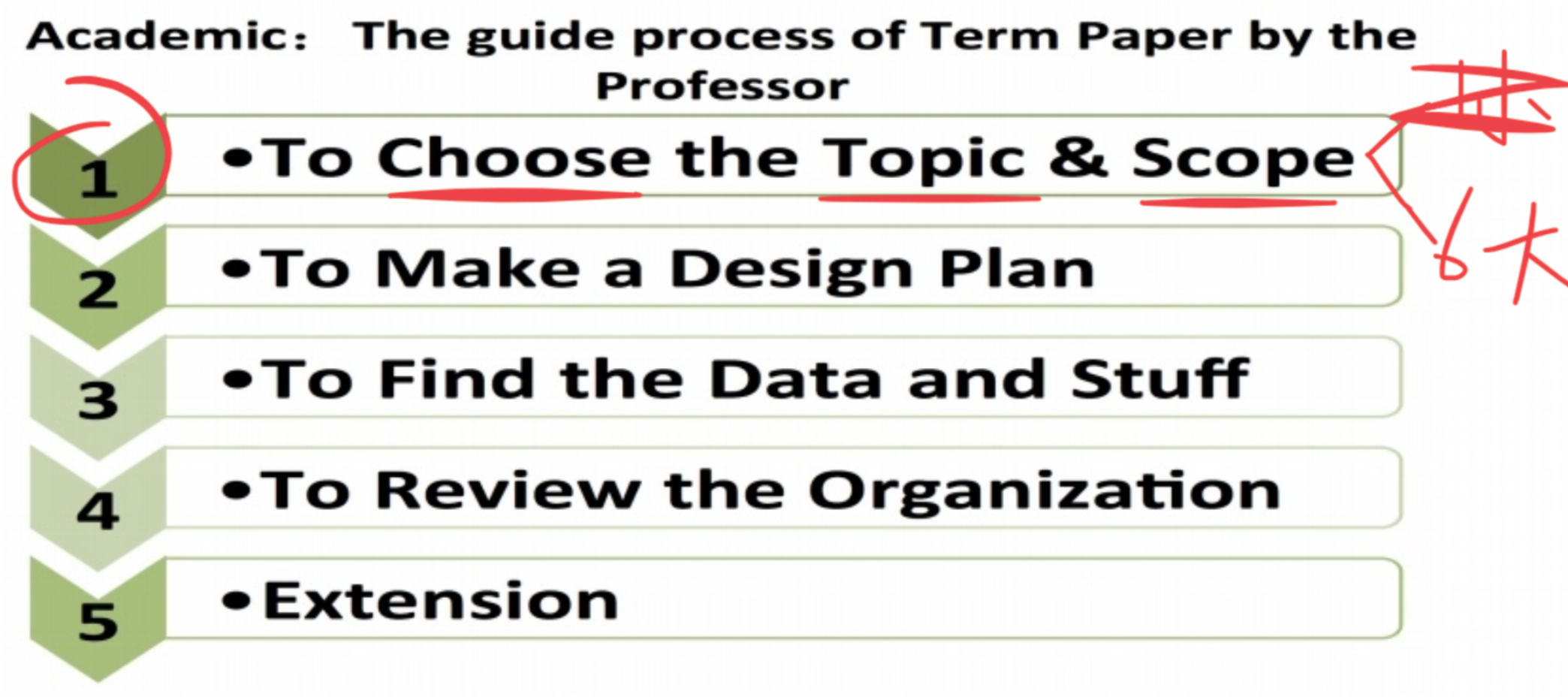
Scope too broad postpone deadline—extension outline
comment
Service Encounters #
registration dorm club bookstore / shop volunteer internship, etc.
Double negatives like not unlike sth—not unlike
faculty — teaching staff
department—on campus, not “dept” in the business sense; means college / school
funding money, funds, sponsorship
Lectures #
History, archaeology, anthropology, psychology, sociology, business/economics, philosophy, education (mostly humanities themes—STEM jargon is too specialized)
Archaeology #
site location grave/tomb
form structure
function function
digging->tool fossil artwork
tribe->tribe war
Basic structure:
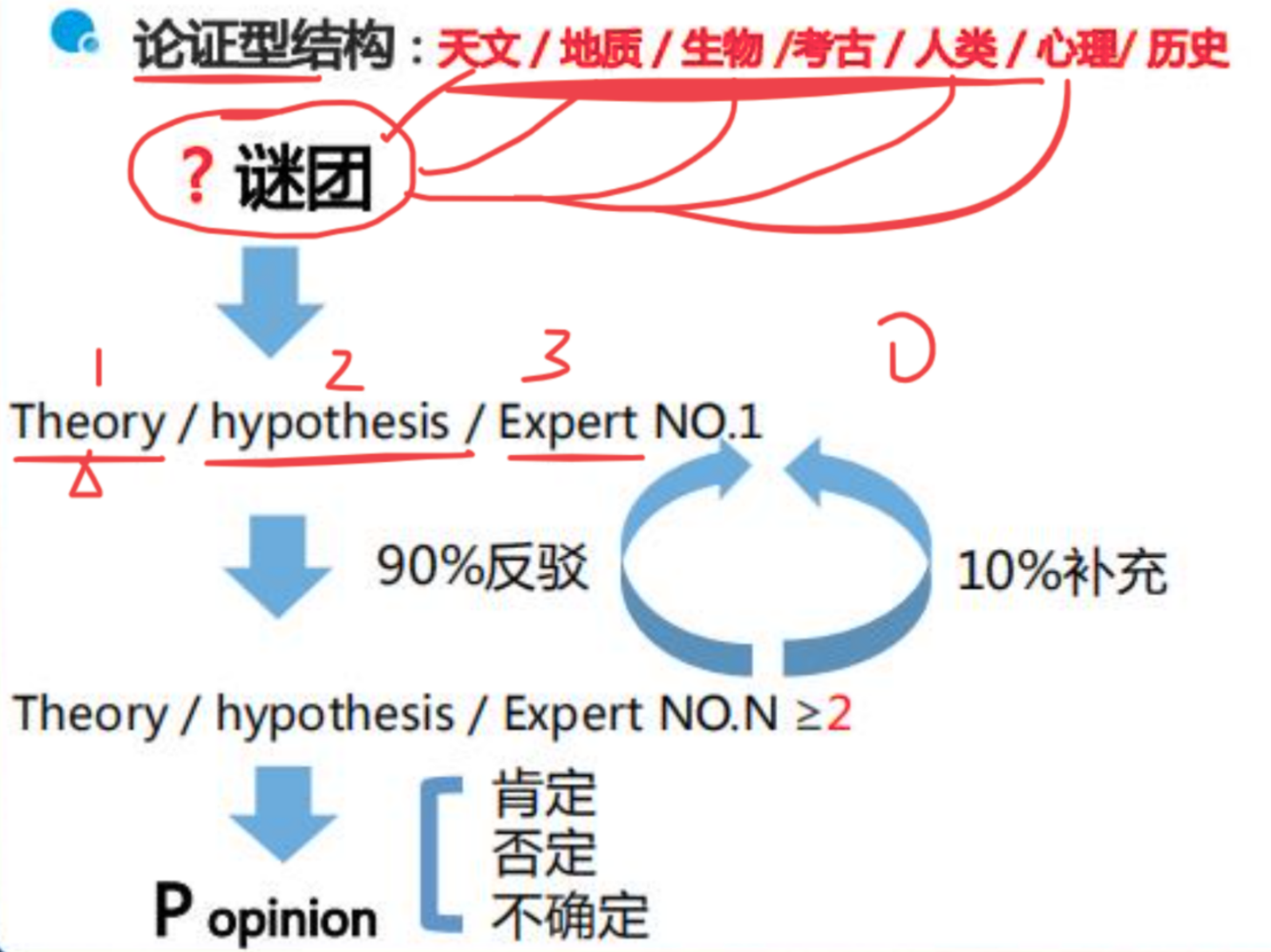
Attitude questions in lectures:
Degree of certainty:
affirmative / negative / uncertain
(mostly near the end)
Art & History #
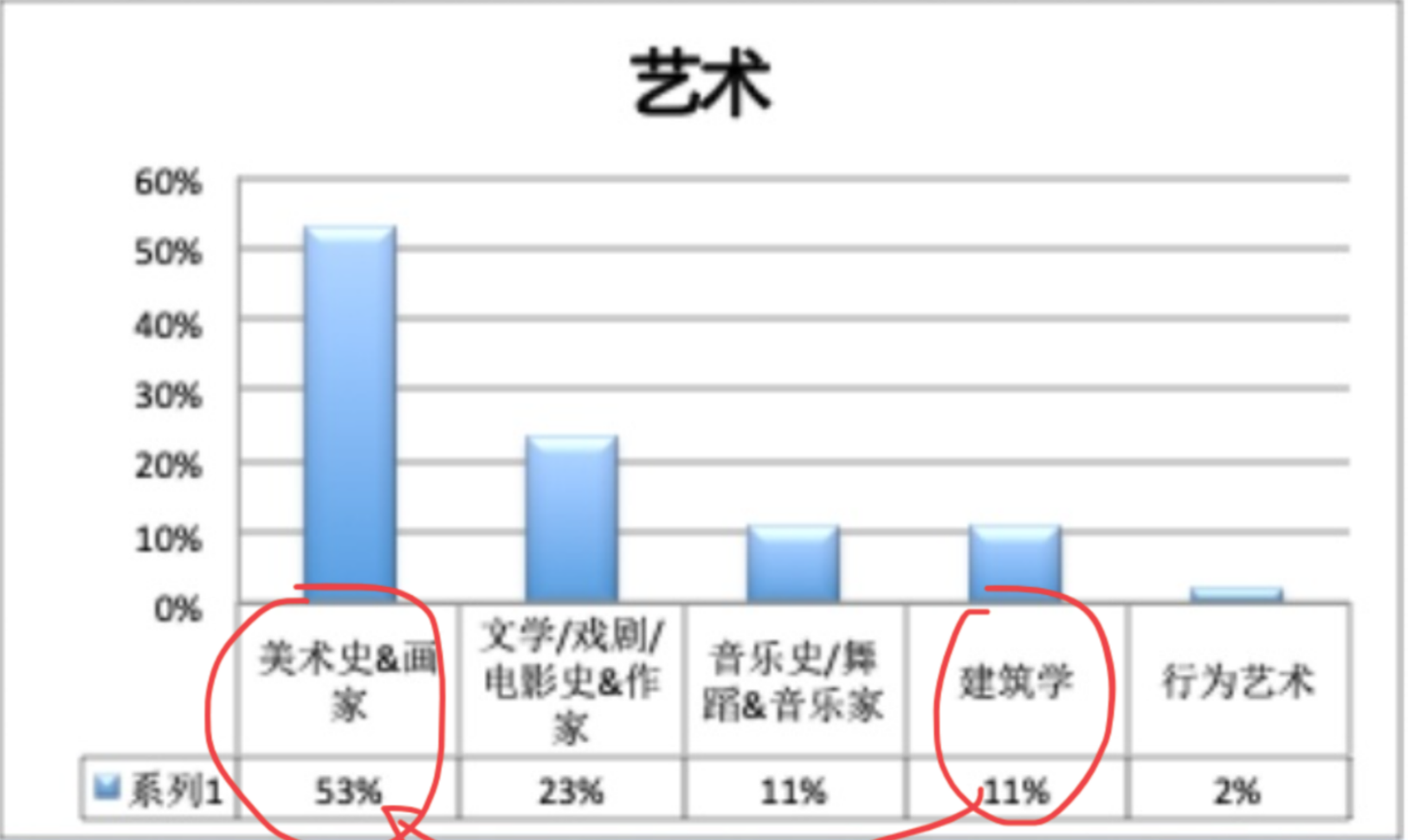
Brief background:
Fresco (The Last Supper)

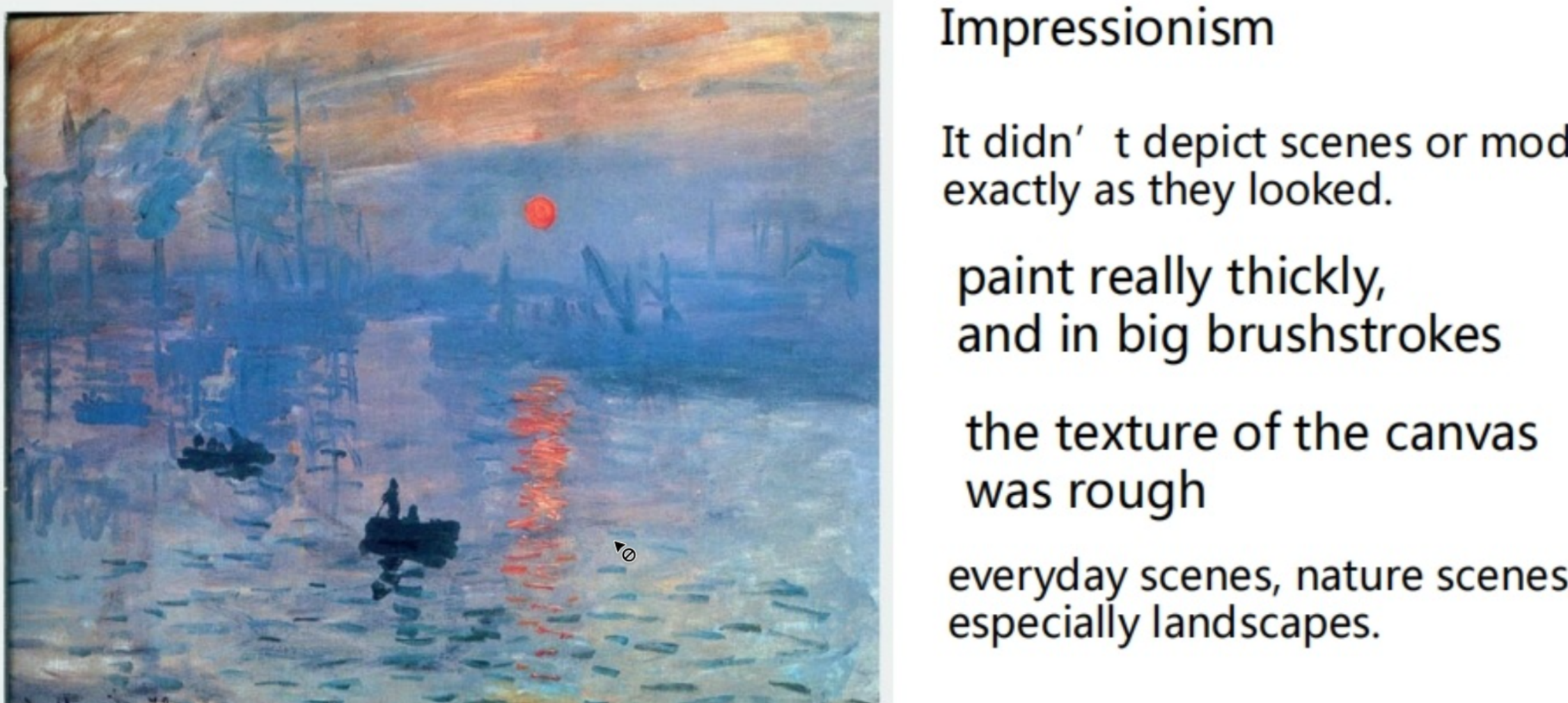
Brushstroke
texture canvas surface
canvas oil painting
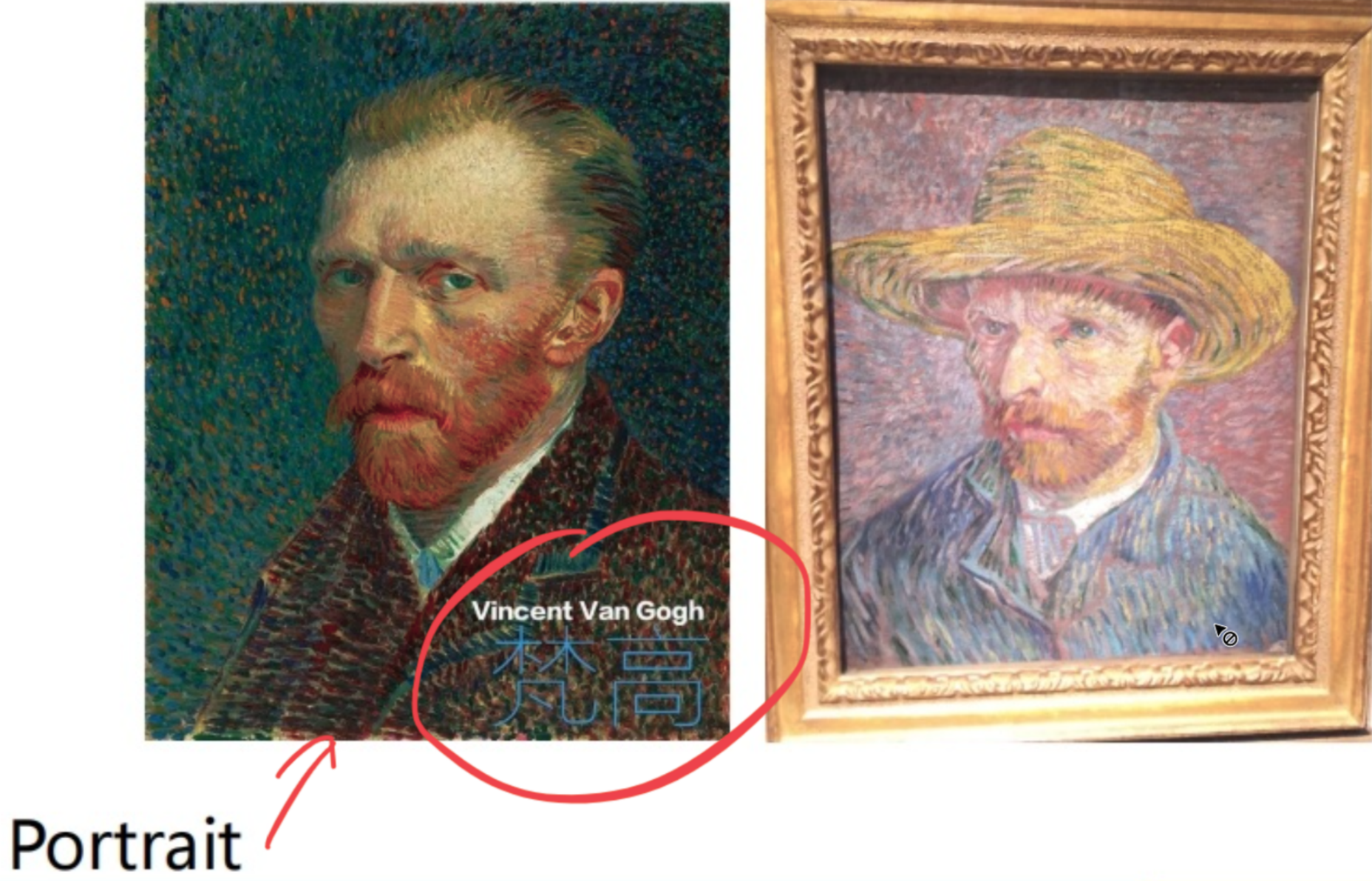
Portrait painting
Art Criticism critic / connoisseur
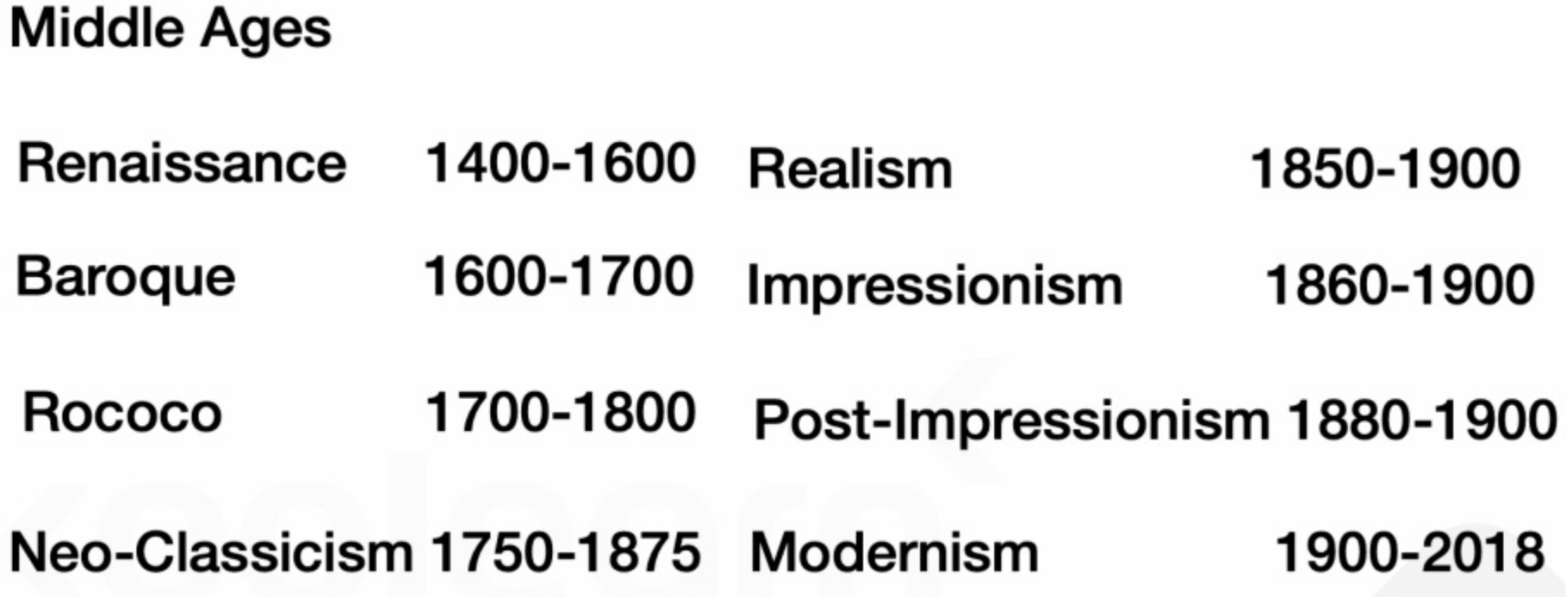
1400-1600 Renaissance
1600-1700 Baroco
1700-1800 Rococo
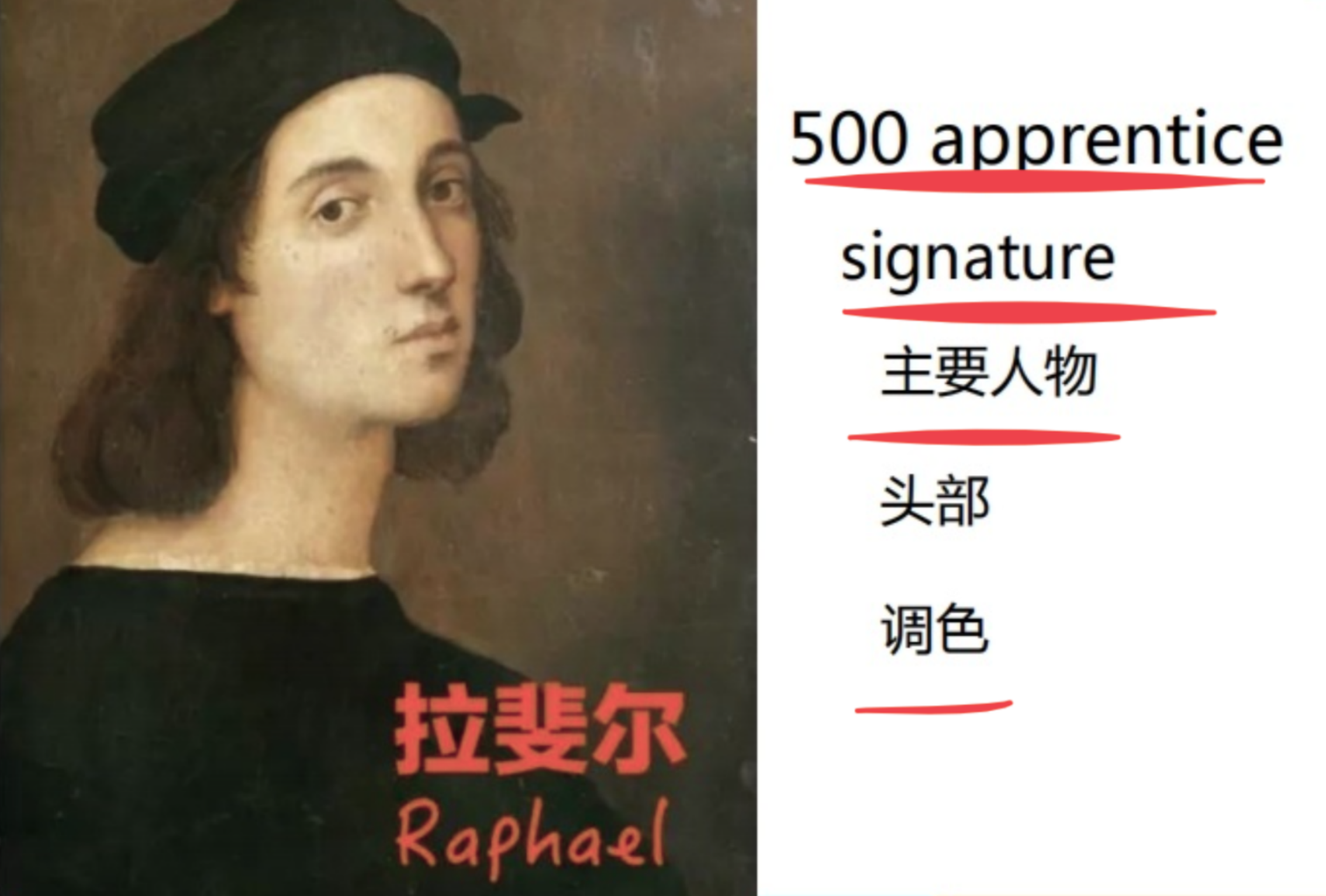
Artist biography lectures
-
unique
-
*style
-
work
-
*event—> how the style formed
-
P — professor’s evaluation—> often very positive
Appreciating a painting:
-
subject
-
background—composition
-
color
-
brushstroke
Artist main-idea answers:
-
the artist
-
their style
-
their works
-
their views
History:
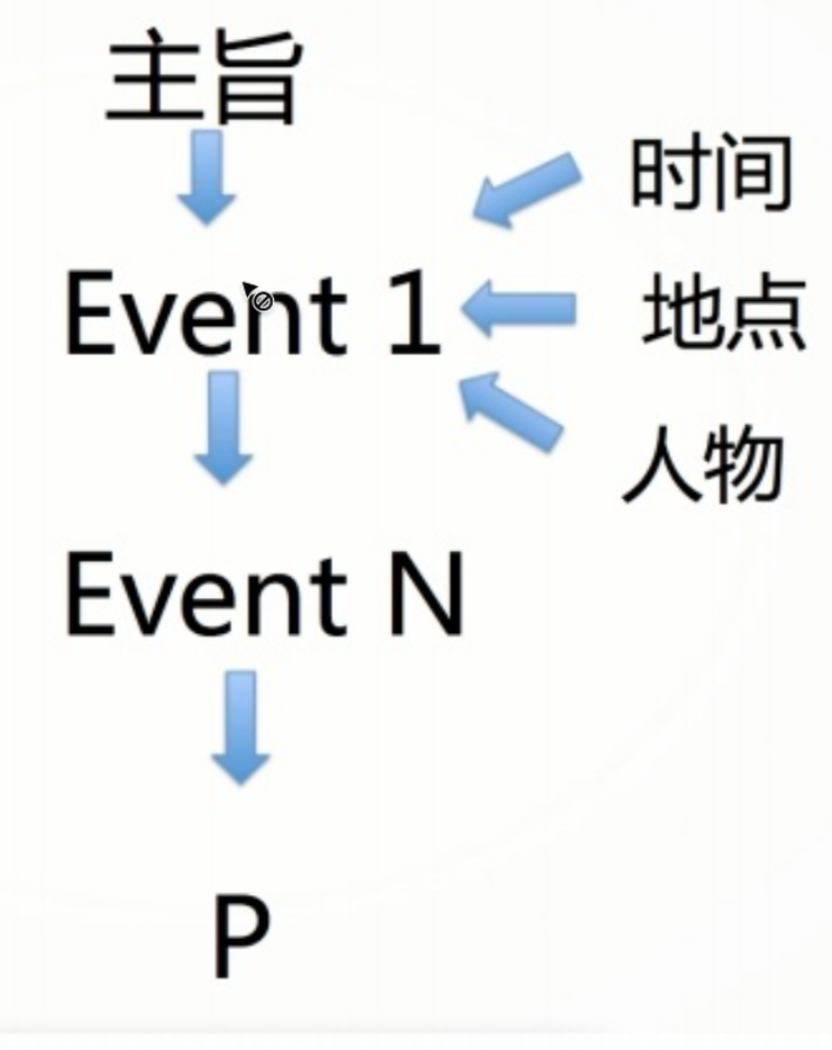
acoustic
Natural Science #
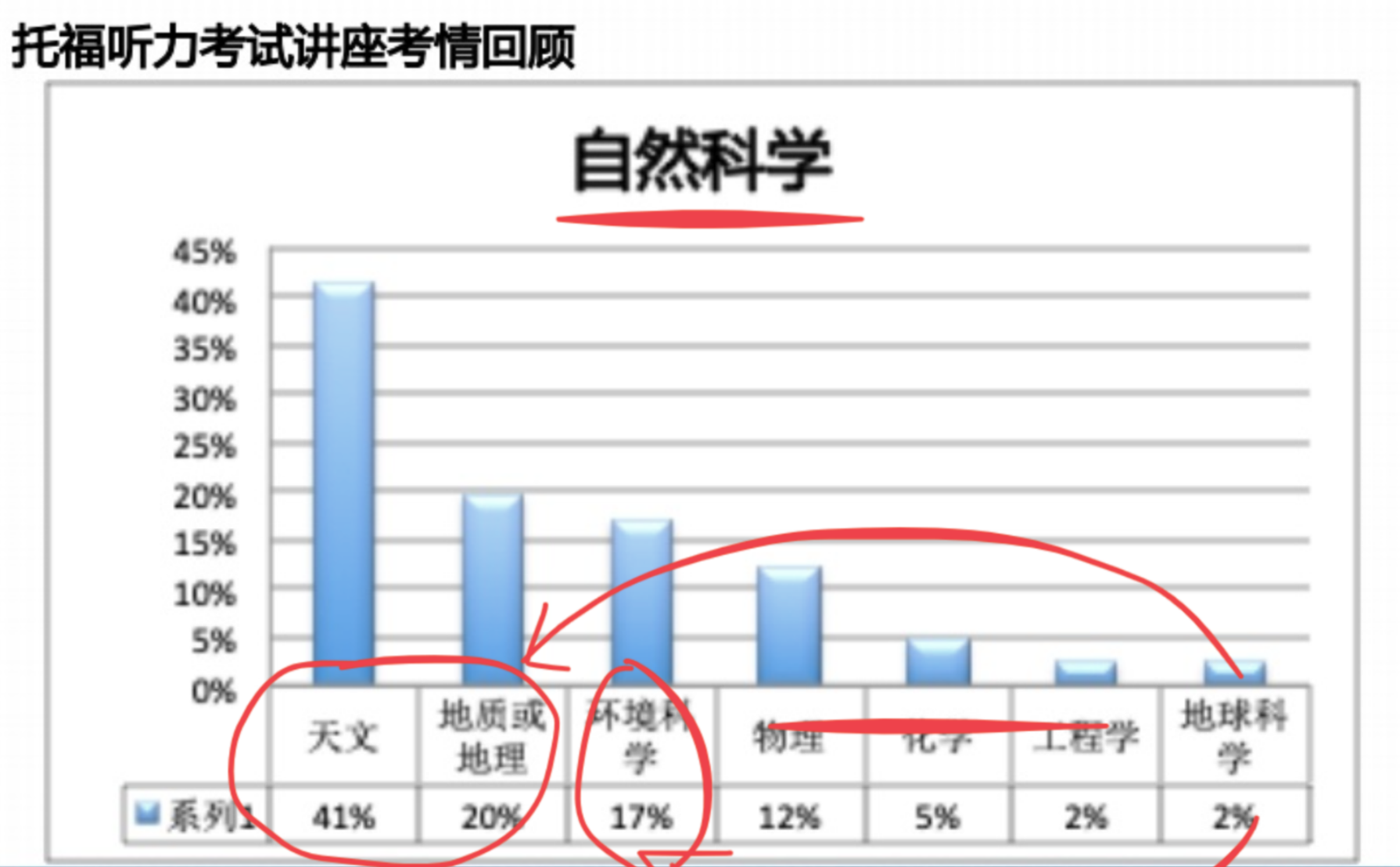
Astronomy and geography are similar
Content main idea—usually simpler (not always).
Question and passage move together
Main-idea questions cover the whole lecture
Replay questions may not
core-mantle-crust-atmosphere
lava-magma
Selection principles:
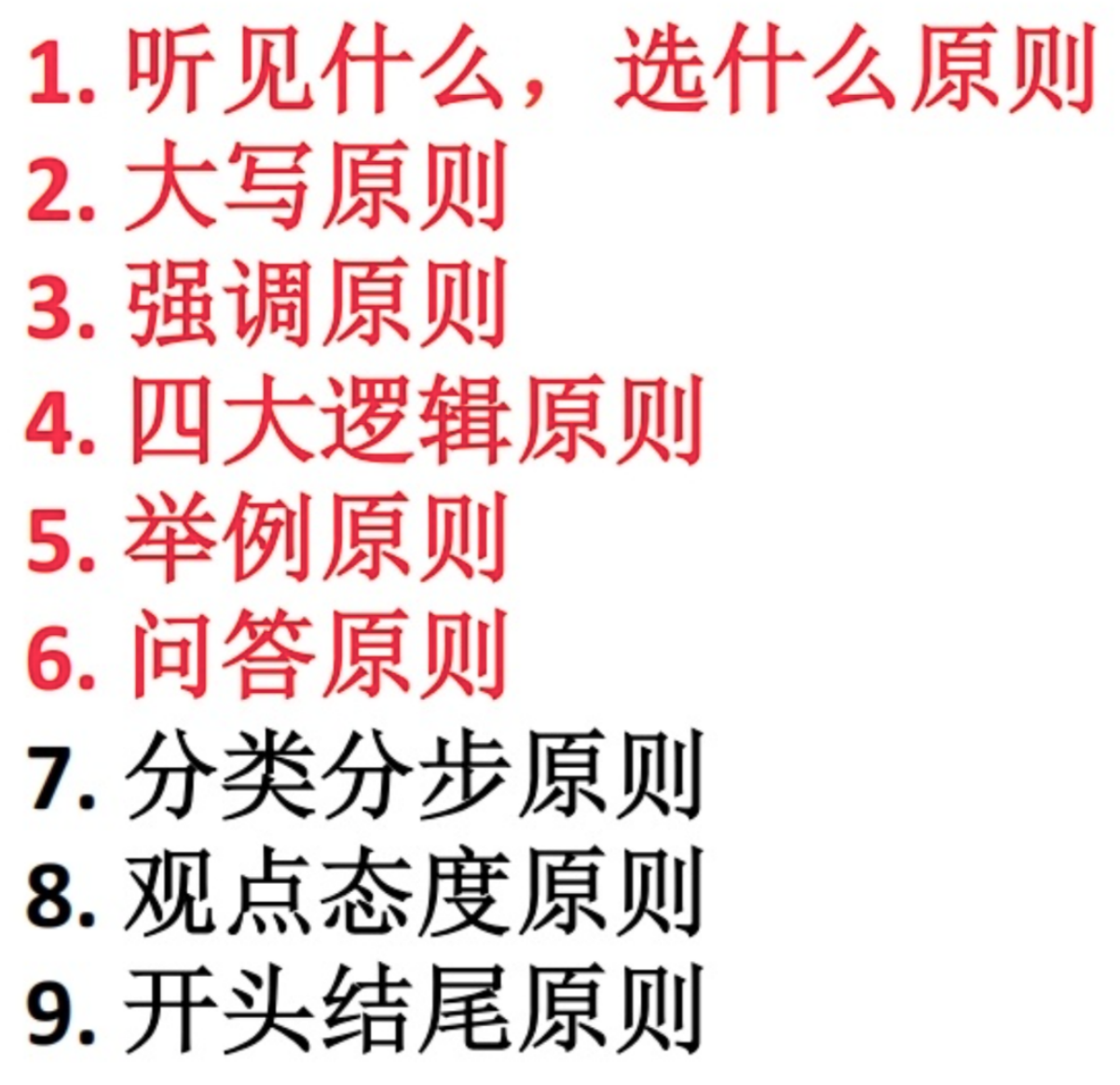
Zoology / Botany / Ecology #
Animal questions are general; not exotic species.
behaviour—reason
physiology organ/cell brain/heart high frequency; organ function—able to do sth
responsible for
Replay questions
-
ordinary replay
-
inference: imply / infer
Answer is not the verbatim line.
Use reverse thinking.
Question types:
A: odd tone.
Plain: what a but-turn means.
B: full information.
Partial information: think upstream; earlier info was incomplete—harder.
Botany:
algae photosynsize
bacteria fungi
Genetics: dna genes
Ecology
ecological problem—humans—remedies—explain the mechanism—examples
Reading #
Sentence Simplification #
My take: if you understand the sentence, you do not need grammar—but what blocks understanding is often complex grammar (obviously).
Changes or omissions of key information. Usually ultra-long hard sentences
Sentence: stem + modifiers + logic
predicate
-
Stem—> subject–predicate
-
Modifiers: restrict or supplement
-
Logic: relations between stems—> parallel or primary/secondary
nonessential modifiers
sentence
clause
paraphrase: substitution does partial substitution break meaning?
e.g. : exempli gratia
paleontologists
invasion invasion rate
spore
propagules genetic material
Factual Information #
No fixed form—> based on a given paragraph, you may……
imply->implicit
explicit->overt
limiter + abstract = concrete
in the presence of
Negative Factual Information & Inference #
Incorrect, or information not contained in the passage.
verify—>confirm.
Inferences are fairly direct.
Rhetorical Purpose #
I still think understanding the text solves everything.
be responsible for—cause of…
eliminate–rule out; may aim to exclude a certain view.
view: opinion view hypothesis theory
Paragraph purpose, and relation to other paragraphs.
comprehensive look—broad perspective
Insert Text #
Question 9.
Clear referents or logical links—e.g. They believe constrains the referent to humans.
Parallel: also, other—the two sides may be similar in length
Cause–effect: consequently, thus
Contrast: but, however, on the contrary
delineate: express, describe, depict
And yet (contrast) / thus / also: and can combine with many logical words
Later referents may also point backward.
Expression Bank #
For output tasks like writing and speaking—> use sentences.
There is no such secret ingredients. There are no shortcuts.
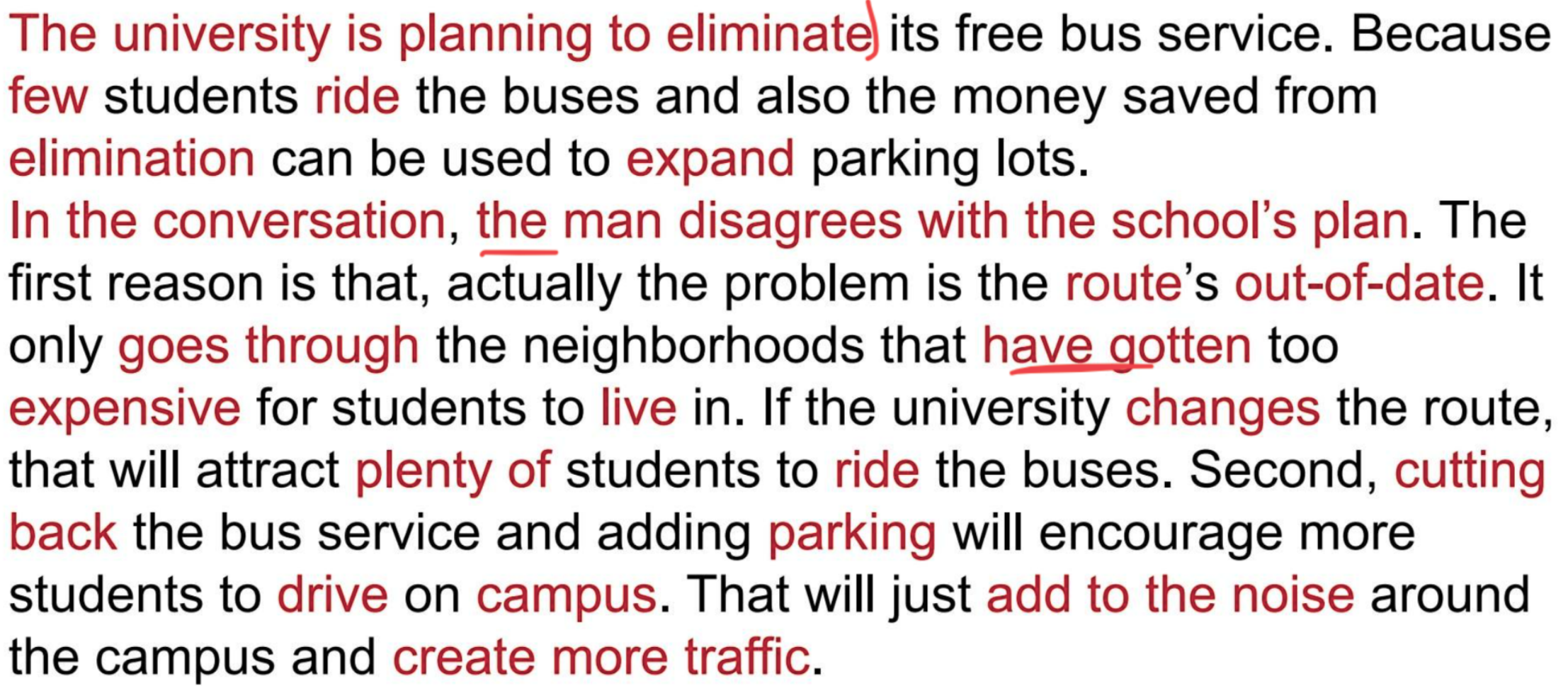
Listening to our intution and gut feeling is essential.
…,which leads to a sense of frustration.